

Understanding mold remediation is one of the most practical ways homeowners protect their property and family health. Whether you’ve spotted a stain in a basement corner or you’re dealing with a persistent musty smell, knowing how mold remediation works — when to tackle it yourself and when to call a pro — will save time, money, and stress.

Why mold matters for homeowners
Mold grows where moisture and organic material meet. It can damage drywall, flooring, insulation, and structural wood, and it can aggravate allergies or respiratory conditions. Effective mold remediation addresses the visible growth and the underlying moisture source so the problem doesn’t return. The EPA offers clear guidance on when remediation is needed and how to reduce mold (https://www.epa.gov/mold) (source).
Common signs of mold to never ignore
You don’t always need to see a fuzzy patch to have a problem. Watch for:
- Persistent musty odors.
- Water stains or discoloration on walls or ceilings.
- Peeling paint or wallpaper, and warped drywall.
- Recurrent allergies, coughing, or unexplained headaches when at home.
Early detection makes mold remediation simpler and cheaper. If you notice multiple signs, act quickly.
DIY vs. professional mold remediation: how to decide
Not all mold problems require a specialist. Small, localized areas (less than about 10 square feet) can often be handled safely by homeowners. However, hire a certified professional when:
- Mold covers a large area.
- Mold returns after repeated cleanings.
- You suspect mold in HVAC systems, behind walls, or in structural cavities.
- Occupants have serious health issues (e.g., immunocompromised individuals).
Professionals bring containment, air filtration (HEPA), moisture diagnostics, and trained removal methods that reduce cross-contamination and ensure the job is thorough.
Step-by-step mold remediation (a homeowner’s checklist)
Use this numbered list as a baseline for understanding professional remediation or doing safe DIY cleanup:
- Identify and stop the moisture source — fix leaks, improve ventilation, or remove standing water.
- Isolate the affected area — close doors and cover vents to prevent spore spread.
- Protect yourself — wear an N95 or higher respirator, gloves, and eye protection.
- Remove non-salvageable materials — heavily contaminated drywall, insulation, and carpeting may need disposal.
- Clean salvageable surfaces — scrub hard surfaces with detergent and water, and use mold-killing solutions when appropriate.
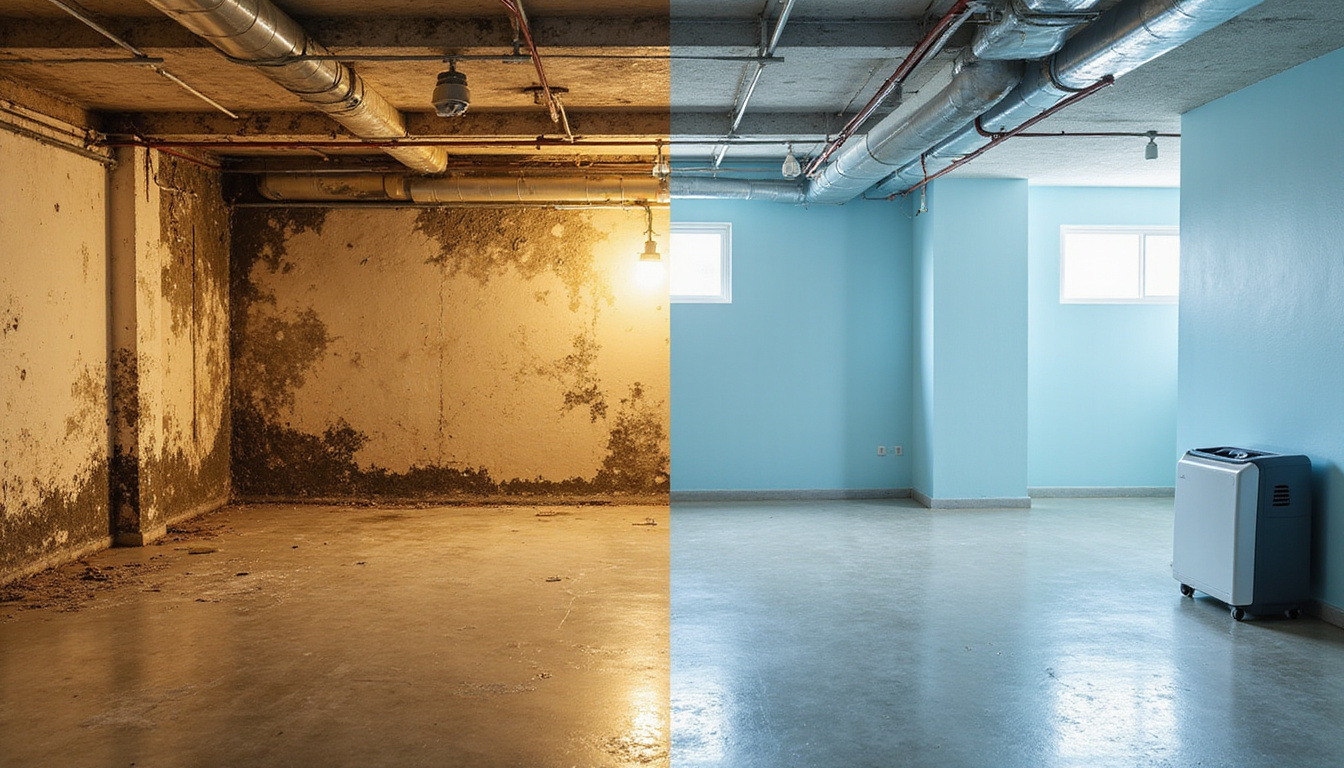
- Dry thoroughly — use dehumidifiers and fans; moisture must be reduced to below ~60% relative humidity.
- Repair and restore — replace removed materials and repaint or refinish using mold-resistant products when possible.
- Reassess — ensure the smell is gone and humidity remains controlled; consider follow-up testing if needed.
Tools and products commonly used include HEPA vacuums, dehumidifiers, moisture meters, detergents, and EPA-registered fungicides. Avoid using bleach on porous materials — it can sometimes mask rather than remove mold roots.
Preventing future mold growth
Prevention is the most cost-effective part of mold remediation. Key steps:
- Control indoor humidity: aim for 30–50% relative humidity using dehumidifiers and HVAC systems.
- Ventilate: use exhaust fans in bathrooms and kitchens; run them during and after showers and cooking.
- Repair leaks promptly: roofs, windows, and plumbing must be watertight.
- Use mold-resistant building products in vulnerable areas: greenboard, cement board, and mold-resistant paints.
- Keep gutters clean and grade soil away from your foundation to prevent water buildup.
Health risks and when to test
Mold exposure can trigger allergic reactions in sensitive people and may exacerbate asthma. For most cases, visible mold does not require laboratory testing — you remediate what you see and fix moisture problems. Testing may be useful if:
- Mold is hidden (e.g., HVAC or behind walls) and you need to confirm presence.
- You need documentation for insurance or legal purposes.
- Occupants are experiencing unexplained health symptoms and you want to identify species.
If you choose testing, use an accredited laboratory and combine testing with a professional inspection for the best results.
How much does mold remediation cost?
Costs vary widely by scope and region. Small DIY cleanups may cost under $200 for supplies; professional remediation for a single room may run $500–$3,000, while complex jobs affecting structural elements can exceed $10,000. Factors that affect price include:
- Size of the affected area.
- Extent of structural damage.
- Need for HVAC cleaning.
- Containment and air filtration requirements.
- Restoration and replacement of building materials.
Get at least three written estimates and check credentials. A reputable company will provide a clear plan: containment, removal, cleaning, drying, and verification.
Choosing a mold remediation contractor
Ask these essential questions before hiring:
- Are you licensed, insured, and bonded?
- Can you provide references and before/after documentation?
- Will you use HEPA filtration and proper containment?
- How will you find and fix the moisture source?
- Do you offer a written protocol and final clearance testing?
A reliable contractor will explain the process, timelines, required access, and any trade-offs (e.g., when removal is preferable to cleaning).
Common mistakes homeowners make
- Treating symptoms only: cleaning visible mold but not fixing moisture.
- Using bleach on porous materials where mold roots remain.
- Skipping professional help for large or hidden infestations.
- Not documenting the problem for insurance when necessary.
When to involve specialists such as an industrial hygienist
If you suspect systemic issues, like mold in HVAC systems, or you need clearance testing for health or legal reasons, hire an industrial hygienist or an independent consultant. They can design a testing plan and interpret results unbiasedly.
FAQ: quick answers to common homeowner questions
Q: How long does mold remediation take?
A: Small jobs can take a few hours to a day. Comprehensive remediation involving structural repairs can take days to weeks, depending on drying time and restoration needs.
Q: Is mold removal the same as mold remediation?
A: “Mold removal” generally means cleaning or discarding moldy materials; “mold remediation” includes removal plus identifying and fixing moisture sources, containment, and preventing recurrence.
Q: What affects mold remediation cost?
A: Size of the area, type of materials affected, presence of hidden mold, HVAC involvement, and required containment protocols all influence cost.
Authoritative guidance and next steps
For trustworthy, science-based information on mold and remediation practices, consult the U.S. Environmental Protection Agency’s mold page (https://www.epa.gov/mold) (source). Their guidance helps homeowners decide when to clean and when to consult professionals.
Final thoughts and call to action
Mold remediation doesn’t have to be overwhelming. With early detection, a focus on moisture control, and the right mix of DIY and professional help, most homeowners can protect their property and family health. If you see mold, take the first step today: identify the moisture source, contain the area, and decide whether to clean or call a certified remediator. For peace of mind, schedule a professional inspection or get multiple remediation quotes — acting now will prevent small problems from becoming costly repairs. Contact a qualified mold remediation specialist in your area to get a clear plan and an estimate for restoring a safe, dry home.