

Mudroom Magic: Smart Storage Ideas for Busy Family Homes
A well-planned mudroom can turn daily chaos into a smooth, grab-and-go routine—especially in busy family homes. Whether your “mudroom” is a full room, a small hallway, or just a nook by the door, smart storage is what makes it work. With the right systems, you can corral backpacks, shoes, sports gear, and coats so your entryway feels calm instead of cluttered.

Below are practical, family-friendly ideas to help you design (or refresh) a mudroom that works just as hard as you do.
Why Every Busy Family Needs a Functional Mudroom
For families, a mudroom is more than an entryway; it’s a transition zone between the outside world and your living space. When designed well, it:
- Catches dirt, mud, and wet gear before it hits your main floors
- Organizes everyday essentials like shoes, coats, and bags
- Gives kids clear, simple places to put their things
- Reduces morning and evening stress by keeping everything visible and easy to grab
Even a tiny mudroom area can dramatically improve daily routines if you focus on storage, traffic flow, and durability.
Step One: Define Your Mudroom’s Job
Before diving into storage solutions, decide what you need your mudroom to actually do. Some common functions:
- Family drop zone: Coats, backpacks, shoes, keys, mail
- Sports hub: Cleats, balls, gear bags, water bottles
- Pet station: Leashes, treats, towels, litter or outdoor gear
- Laundry helper: Dirty socks, outdoor clothes, quick stain treatment
- Cleaning command center: Mops, brooms, vacuum, and supplies
Make a short list of what truly needs to live in your mudroom. This prevents it from becoming a catch-all that’s impossible to keep tidy.
Built-In vs. Freestanding: Choosing the Right Storage
How you design your mudroom depends on space, budget, and whether you own or rent.
Built-In Mudroom Storage
Custom or semi-custom built-ins are ideal if you:
- Plan to stay in your home for several years
- Want the mudroom to feel like a seamless part of the house
- Need maximum use of every inch (especially in narrow spaces)
Built-ins can include bench seating, cubbies, cabinets, and drawers tailored to your family’s needs. They also boost resale value because buyers love a functional mudroom (source: National Association of Home Builders).
Freestanding Mudroom Solutions
If you’re renting, on a tight budget, or prefer flexibility, freestanding pieces work beautifully:
- Bookcases converted into cubbies
- Coat racks and hall trees
- Storage benches and shoe cabinets
- Utility carts and rolling bins
You can still get a “custom” look by arranging these thoughtfully and sticking to a simple color palette.
The Power of Personal Cubbies
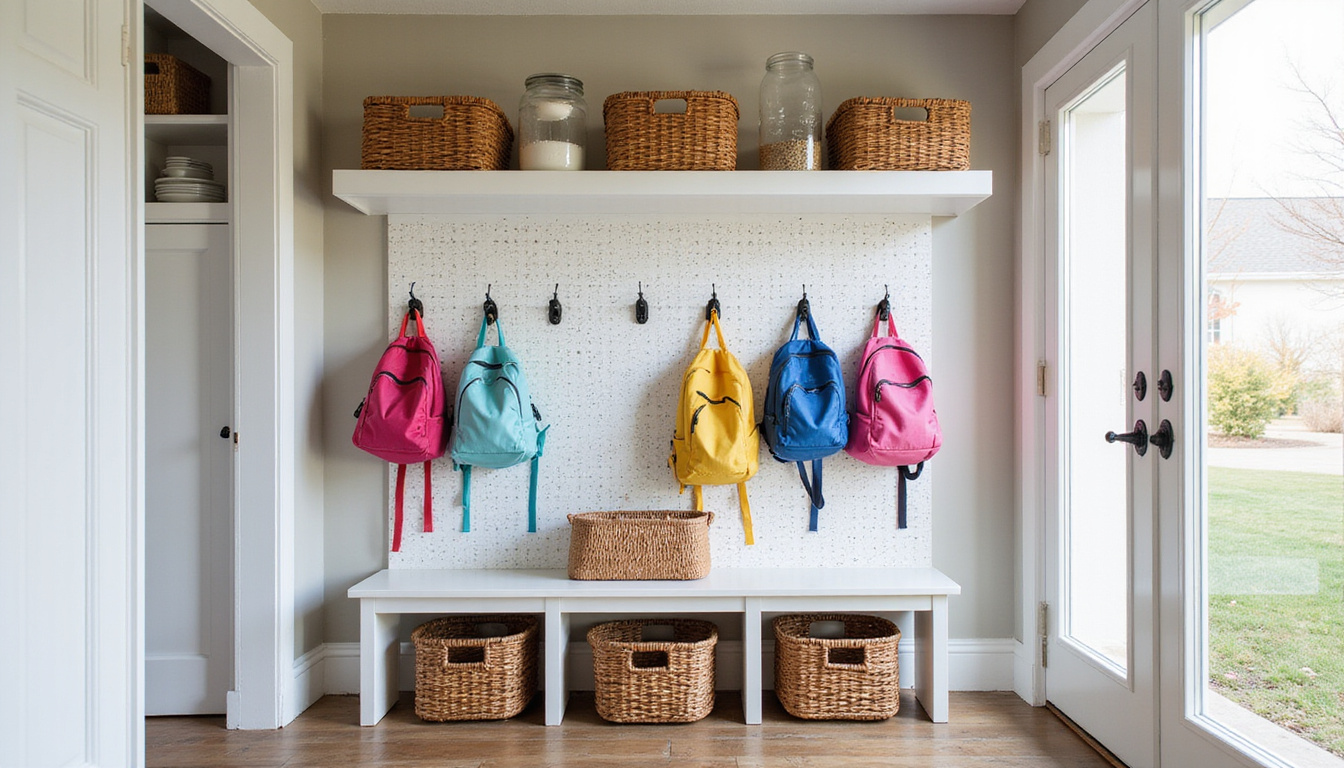
Personal cubbies are the backbone of a family-friendly mudroom. They give each person a dedicated space and make it obvious where things belong.
What Each Cubby Should Include
Aim for a basic setup like:
- Upper hook(s): Coats, backpacks, sports bags
- Lower hook: Lunchboxes, smaller bags, headphones
- Shelf or cabinet above: Seasonal items, hats, gloves, sunscreen
- Bin or basket below: Shoes, boots, or sports gear
Label each cubby with a name tag, photo, or color to make it easy for younger kids to use.
Size and Spacing Tips
- Allow enough width for bulky winter coats (usually 18–24 inches per person).
- If space is tight, stagger hooks vertically so items overlap instead of bunching up.
- For growing kids, choose adjustable shelves or leave wiggle room.
Benches: The Unsung Hero of Every Mudroom
A bench makes your mudroom more comfortable and encourages people to actually sit and take off shoes instead of tracking dirt into the house.
Types of Mudroom Benches
- Open bench with baskets: Great for everyday shoes and fast cleanups
- Closed bench with lift-up seat: Ideal for off-season items or less-used gear
- Drawer bench: Keeps clutter hidden and organized by person or category
Choose a bench depth of about 15–18 inches so it’s comfortable to sit on and doesn’t block the walkway.
Practical Bench Tips
- Use durable, easy-to-clean materials (laminate, sealed wood, or outdoor-grade cushions).
- Add a washable, non-slip cushion for comfort.
- Keep at least 36 inches of clear walkway in front if it’s a main traffic route.
Smart Shoe Storage That Actually Works
Shoes are often the biggest source of mudroom mess. The key is to match storage to real habits and lifestyle.
Everyday vs. Occasional Shoes
- Keep everyday shoes near the door on open shelves or racks.
- Store infrequently worn shoes (heels, special occasion shoes) in bedroom closets or a higher shelf.
Ideas for Shoe Organization
- Tiered shoe racks under the bench
- Deep drawers with dividers for kids’ shoes
- Individual shoe baskets for each family member
- Boot trays or mats for wet and muddy footwear
Line shoe shelves with removable, washable liners to protect them from dirt and salt.
Vertical Space: Your Mudroom’s Secret Weapon
When floor space is limited, think up, not out.
Use Your Walls and Doors
- Add a second row of hooks higher up for off-season coats or guests.
- Install floating shelves for hats, gloves, bike helmets, or handbags.
- Use over-the-door organizers for cleaning supplies, scarves, or pet gear.
Ceiling and High Storage
- Add high cabinets or shelves for rarely used gear (camping equipment, extra paper towels, etc.).
- Use clearly labeled bins so you can quickly find things without digging.
Organizing Gear: Sports, School, and Pets
Busy families juggle many activities. Grouping things by category makes your mudroom feel controlled instead of chaotic.
Sports Equipment Station
- Large bins or baskets for balls and bulky gear
- Vertical racks for hockey sticks, bats, or yoga mats
- Hooks for gym bags and team backpacks
- A small shelf or caddy for water bottles and sweatbands
Consider a rule: sports gear goes straight to the mudroom when you walk in, not dropped in the living room.
School and Homework Zone
- Hooks or cubbies for backpacks and lunchboxes
- A slim wall file or magazine rack for homework folders and school papers
- A small whiteboard or corkboard for reminders, schedules, and permission slips
If homework is done at the kitchen table, position the mudroom near that path to make transitions easier.
Pet-Friendly Mudroom Setup
Turn part of your mudroom into a pet hub:
- Hooks for leashes and harnesses
- A bin for toys, waste bags, and grooming tools
- A mat for food and water bowls
- A towel hook and basket for muddy paws
For dogs that track in a lot of dirt, keep a small spray bottle of water and pet-safe wipes handy.
Controlling Clutter with Simple Systems
A mudroom will only stay organized if the systems are easy enough for everyone to follow.
Create Clear “Homes” for Everything
Use labels (words or icons) on:
- Bins and baskets
- Drawers and cabinets
- Hooks and cubbies
For young kids, use picture labels: a shoe icon, backpack icon, or sports ball icon.
One-Minute Maintenance Habits
Build in tiny routines:
- After school: Shoes off, backpack on hook, lunchbox to kitchen.
- Evening: Quick 60-second mudroom reset (shoes lined up, gear in bins).
- Weekly: Empty out-of-season or extra items and wipe down surfaces.
These micro-habits prevent your mudroom from turning into a dumping ground.
Kid-Friendly Design: Make It Easy to Use, Not Just Pretty
For families, a gorgeous mudroom doesn’t mean much if kids can’t reach or use anything.
Kid-Focused Design Tips
- Install lower hooks at child height for coats and backpacks.
- Use lightweight bins instead of heavy drawers.
- Avoid breakable decor and fragile baskets.
- Choose flooring that hides dirt and is non-slip (textured tile, vinyl, sealed concrete).
Let kids help choose the color of their cubby bins or labels; it boosts buy-in and makes them proud of “their” spot.
A Quick Checklist for Planning Your Mudroom
Use this list to guide your design or makeover:
- Decide the main functions (drop zone, sports hub, pet area, etc.).
- Assign a dedicated spot for each family member.
- Add seating: a sturdy, easy-to-clean bench.
- Plan shoe storage (daily vs. occasional).
- Maximize vertical space—hooks, shelves, and high storage.
- Group items by category: school, sports, pets, cleaning.
- Use labels and clear containers to reduce confusion.
- Choose durable, washable finishes and rugs.
- Create simple daily and weekly reset routines.
- Review and adjust the system every season.
FAQs About Mudrooms and Family Storage
Q1: What is a mudroom in a house, and do I really need one?
A mudroom is a dedicated entry area where outdoor gear, shoes, and daily essentials are stored before you enter the main living space. While not strictly necessary, even a tiny mudroom-style zone can significantly cut down on clutter, dirt, and lost items—especially for busy families.
Q2: How can I create a mudroom in a small space or apartment?
You can create a small mudroom area using a wall by the door or part of a hallway. Combine a narrow bench, wall hooks, a shoe rack, and a few labeled baskets. Vertical storage and over-the-door organizers turn even a few feet of wall into an effective mini mudroom.
Q3: What should be stored in a family mudroom to keep it organized?
Limit your mudroom storage to high-use, entry-and-exit items: everyday shoes, coats, backpacks, sports bags, pet leashes, keys, and a few seasonal accessories. Off-season gear, extra shoes, and bulky items are better stored elsewhere so your mudroom doesn’t get overwhelmed.
A thoughtful mudroom can turn rushed mornings and messy evenings into smoother, calmer routines. By combining personal cubbies, practical benches, smart shoe storage, and simple daily habits, you create an entryway that works for your whole family—not just looks good in photos.
If your current entryway feels more like a dumping zone than a functional mudroom, now is the perfect time to redesign it. Start with one corner, one bench, or one set of hooks, and build from there. With a few intentional changes, you can transform the way your family comes and goes—one organized mudroom at a time.