

If you’re constantly battling street noise, loud neighbors, or echoey rooms, smart soundproofing can completely change how your space feels. You don’t need a recording studio budget or a full renovation to make a room noticeably quieter. With the right mix of materials, layout tweaks, and a few clever hacks, you can turn almost any room into a calm, quiet sanctuary.

Below you’ll find practical strategies you can implement in a rental, condo, house, or home office—many of them low-cost and reversible.
Soundproofing Basics: Know What You’re Actually Fixing
Before you grab foam panels or heavy curtains, it helps to understand what kind of sound problem you have. Most rooms suffer from a mix of:
- Airborne noise – Voices, TV, music, traffic. These travel through the air and slip through gaps, thin walls, doors, and windows.
- Impact noise – Footsteps, banging doors, objects dropping, chairs scraping. This travels through the building’s structure.
- Room echo (reverberation) – Sound bouncing around inside the room itself, making it feel loud, harsh, or “ringy.”
Soundproofing deals with noise coming in or out of the room, while acoustic treatment (like foam panels) deals mostly with echo inside the room. For a truly peaceful space, you’ll want a bit of both.
Step 1: Seal the Cracks – Tiny Gaps, Big Noise Leaks
Airborne sound loves gaps. Even small cracks can let a surprising amount of noise through. Start by sealing your room’s weak points.
Doors: The Most Overlooked Noise Leak
Typical interior doors are hollow and often have a big gap at the bottom.
- Add a door sweep: Install a rubber or brush-style door sweep at the bottom to block the gap.
- Use weatherstripping: Stick foam or rubber weatherstrips around the sides and top of the door frame to tighten the seal.
- Add mass: Heavier doors block more sound. If you can’t replace the door, hang a mass-loaded vinyl (MLV) sheet or a thick moving blanket on the back of the door.
These simple soundproofing tweaks often make one of the biggest differences per dollar.
Windows: Your Weakest Barrier to the Outside World
Glass is thin and great at letting traffic and street noise through.
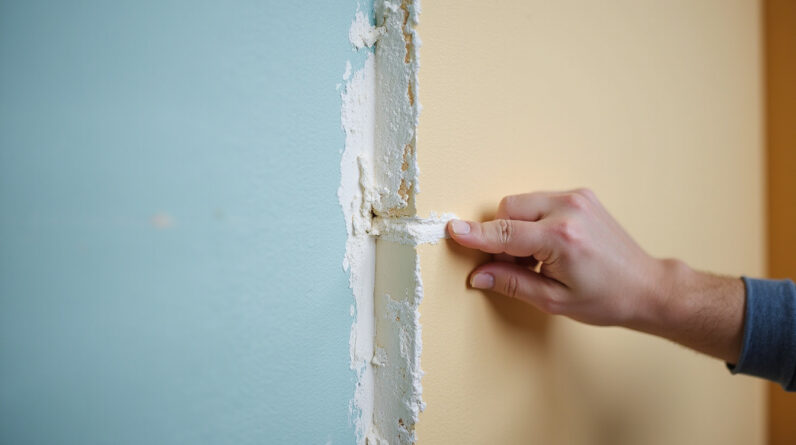
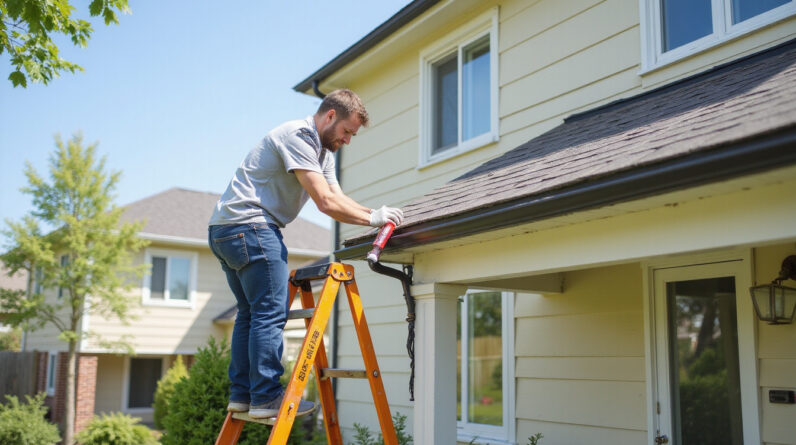
- Seal the frame with acoustic caulk where gaps are visible.
- Use thick, floor-length curtains labeled “thermal” or “blackout”—heavier fabric adds better sound reduction.
- For serious noise: Consider acoustic window inserts that add an extra pane of material inside your existing frame. These can dramatically reduce external noise (source: U.S. Department of Energy).
Even basic caulking and heavy curtains can noticeably cut outside noise in a bedroom or home office.
Step 2: Add Mass – The Core Principle of Soundproofing
When it comes to blocking sound, mass is king. The heavier and denser a barrier is, the harder it is for sound waves to vibrate through it.
Easy Ways to Add Mass to Walls
If you can’t renovate, there are still ways to make walls “heavier”:
- Bookshelves against shared walls: Fill them with heavy books, storage boxes, or records. The added density helps block sound and reduces echo.
- Layered wall hangings: Combine large canvas art, rugs, quilts, or cork boards. Several dense layers outperform one thin decoration.
- Peel-and-stick mass-loaded vinyl (MLV): Some products are thin yet heavy sheets that can be mounted behind furniture or under decorative fabric.
If you’re doing construction, decoupled double drywall with Green Glue soundproofing compound between layers is a gold standard for wall sound reduction.
Step 3: Soften Surfaces – Reduce Echo Inside the Room
Even if you block most outside noise, a room with bare walls and hard floors can still feel loud because sound bounces around. This is where acoustic treatment comes in.
Tame Echo With Soft, Absorptive Materials
Focus on the biggest hard surfaces first:
- Floors: Add plush area rugs and thick rug pads, especially in rooms with tile, wood, or laminate.
- Walls: Use fabric wall hangings, canvas prints, bookcases with irregular contents, and cork boards.
- Ceilings: In echoey rooms, consider lightweight hanging baffles, fabric “sails,” or even tastefully suspended panels.
Foam panels and acoustic tiles help mainly with echo and internal clarity—not blocking sound from neighbors. Use them strategically on first reflection points (spots where sound would first bounce off walls and ceilings).
Step 4: Quiet the Ceiling and Floor – Fight Footsteps and Impact Noise
Impact noise (footsteps, vibrations) is harder to control because it travels through the building structure.
For Floors (Noise You Send to Others)
- Thick rugs with dense underlay: Choose a heavy rug and combine it with a high-density rug pad to cushion footsteps.
- Furniture pads: Put felt pads on chair and table legs to reduce scraping sounds.
- “Floating” layers: In more serious projects, a floating floor with underlayment designed for sound isolation can drastically reduce impact transfer.
For Ceilings (Noise You Receive from Above)
In rentals and finished spaces, your options are more limited, but you can still:
- Install acoustic ceiling clouds or hanging panels to absorb some of the impact sound after it enters.
- Use tension curtain wires and hang dense fabric or quilts close to the ceiling to soften reflections.
Full structural decoupling (like resilient channels and isolated ceilings) is ideal but requires access to the ceiling cavity and is best for remodels.
Step 5: Strategic Furniture Placement for Free Sound Control
You can use what you already own as part of your soundproofing strategy.

- Place the bed or sofa against the noisiest wall to add an instant layer of insulation.
- Use wardrobes and bookcases as “sound shields” along shared walls.
- Fill big empty corners with plants, shelves, or soft furnishings to break up reflections and echoes.
- In home offices, angle your desk and equipment so sound isn’t bouncing straight off a bare wall and back at you.
The goal is to interrupt direct sound paths and avoid large, flat, empty surfaces.
Step 6: Mask Remaining Noise With Smart Soundscapes
No matter how good your soundproofing is, some noise will remain—especially in apartments or cities. That’s where sound masking comes in.
- White or brown noise machines: Constant, gentle noise makes intermittent sounds (like doors closing or distant chatter) less noticeable.
- Apps or smart speakers: Play rain, waves, or gentle fan sounds at low volume.
- Real fans or air purifiers: These produce consistent background noise while serving a useful purpose.
Sound masking doesn’t reduce noise level; it makes disruptive noises less prominent, which can be crucial for sleep and concentration.
Step 7: Room-by-Room Soundproofing Hacks
Different rooms have different priorities. Here’s how to tailor your approach.
Bedroom: Maximize Calm and Sleep Quality
- Use blackout/sound-dampening curtains on windows.
- Add a door sweep and weatherstripping to block hallway noise.
- Place your bed away from noisy windows and up against internal walls when possible.
- Use a soft headboard and layered bedding to absorb sound around you.
- Consider a white noise machine for consistent sleep conditions.
Home Office: Focus, Privacy, and Better Call Quality
- Treat the walls near your desk with acoustic panels or fabric art to reduce echo on calls.
- Use a thick rug under your chair, especially on hard floors.
- Seal your door and use a draft stopper to cut down on voice and hallway noise.
- Place bookshelves behind you (great for both sound and video call backgrounds).
Living Room: Balance Quiet and Aesthetics
- Use large rugs, curtains, and cushions to soften the overall sound.
- Mount the TV on a non-shared wall if possible, or place a sound-absorbing panel behind it.
- Add mixed materials—wood, fabric, plants, books—to scatter and absorb sound naturally.
A Simple Soundproofing Action Plan
To avoid feeling overwhelmed, work in stages. Here’s a practical sequence:
-
Identify the main noise sources
Is the problem outside traffic, neighbors, footsteps, or echo? -
Seal gaps
Add weatherstripping, door sweeps, and window caulk. -
Add mass where it matters most
Use curtains, bookcases, and heavy wall hangings on your loudest walls and windows. -
Soften surfaces
Introduce rugs, cushions, and soft décor to reduce echo. -
Use furniture as barriers
Rearrange heavy pieces to shield you from the noisiest walls. -
Mask the rest
Introduce white noise or ambient sound for a final layer of comfort.
Even doing just the first three steps can yield a surprisingly quieter room in a single weekend.
FAQ: Common Questions About Soundproofing
How can I soundproof a room cheaply?
Start with low-cost soundproofing essentials: weatherstripping, a door sweep, thick curtains, and a rug with a pad. Then add secondhand bookcases or soft furnishings along noisy walls. These inexpensive changes often deliver the biggest improvement per dollar.
What is the best DIY soundproofing for walls in an apartment?
For renters, focus on non-destructive wall soundproofing: tall, full bookshelves, layered wall hangings, peel-and-stick acoustic panels, and heavy curtains over both windows and even problematic walls. Avoid anything that requires major drilling or altering the structure.
Do foam panels really work for soundproofing?
Foam panels help with echo and room acoustics, not fully blocking noise from neighbors or traffic. For actual soundproofing, you need mass, airtight seals, and isolation. Foam is a useful tool, but it should be part of a broader strategy, not your only solution.
Transforming a noisy room into a quiet sanctuary doesn’t require a construction crew or a giant budget—just a clear plan and some focused effort. By sealing gaps, adding mass, softening surfaces, and using smart sound masking, you can dramatically improve the comfort and calm of any space.
If you’re ready to enjoy deeper sleep, better focus, and more peaceful downtime, pick the loudest room in your home and start implementing two or three of these soundproofing hacks this week. Small changes add up fast—and the quiet you gain can transform how you feel in your own space.