

Renovation safety should be the first thing you plan for—long before paint colors, tiles, or fixtures. Whether you’re doing a small bathroom update or a full-house remodel, every project introduces risks to your home and family. Dust, chemicals, power tools, temporary structural changes, and unknowns behind your walls can all cause accidents or long-term health issues if not handled correctly.

This essential checklist walks you through the key renovation safety steps to protect your home, your family, and anyone working on your property.
1. Plan your renovation with safety in mind
Most renovation safety problems start because safety wasn’t planned from day one. Before any demolition or construction begins:
Assess risks in each area
Walk the spaces you’re renovating and ask:
- What could fall, break, or become unstable?
- Where will dust and debris travel?
- Are children, pets, or elderly family members exposed to hazards?
- Are there known issues like mold, leaks, or previous DIY wiring?
Document concerns and discuss them with your contractor or any professionals you’re hiring.
Set clear rules with your contractor
If you’re using a contractor, make safety part of the contract:
- Require adherence to local building codes and OSHA standards where applicable.
- Ask who is responsible for daily clean-up and debris removal.
- Confirm they’ll protect non-renovated areas of the house.
- Clarify working hours so you know when tools and hazardous materials are in use.
If you’re DIY-ing, create a simple written plan listing your tasks, tools, and safety measures for each step.
2. Protect your family from dust, debris, and toxins
One of the most overlooked aspects of renovation safety is airborne hazards. Dust and fumes can trigger allergies, asthma, and other health issues—especially in kids, older adults, and anyone with respiratory problems.
Contain the work zone
Use physical barriers so dust and debris stay inside the renovation area:
- Install zippered plastic sheeting over doorways.
- Cover vents and returns in the work zone (but don’t block essential ventilation).
- Lay and tape down durable floor protection in traffic paths.
- Use sticky mats at doorways to capture dust from shoes.
Manage air quality
Poor ventilation can trap dust and volatile organic compounds (VOCs) in your home.
- Open windows when possible during dusty or fume-heavy tasks.
- Use a HEPA air purifier in adjacent living spaces.
- Avoid running HVAC systems during heavy dust creation; thoroughly clean filters and ducts afterward.
- Choose low-VOC or zero-VOC paints, adhesives, and sealants whenever possible.
For major renovations, consider temporarily relocating vulnerable family members during demolition, sanding, or heavy painting.
3. Identify and handle hazardous materials safely
Older homes can hide serious hazards that require professional handling. This is a critical area of renovation safety—disturbing certain materials can release toxins into the air.
Lead paint
If your home was built before 1978 (in the U.S.), there’s a good chance some surfaces contain lead-based paint.
- Test painted surfaces before sanding, scraping, or demolition.
- Hire an EPA-certified lead-safe contractor to handle removal or disturbance.
- Keep children and pregnant women away from any areas where lead may be present.
- Clean thoroughly with HEPA-filter vacuums and wet-wipe methods after work (source: EPA lead safety guidelines).
Asbestos
Common in homes built before the 1980s, asbestos may be found in:
- Old floor tiles and backing
- Pipe insulation
- Popcorn ceilings and some joint compounds
- Roofing materials
Never scrape, sand, or cut suspected asbestos materials yourself. Contact a licensed asbestos inspector and abatement professional.
Mold and moisture issues
Renovations often reveal hidden leaks or mold:
- Use proper containment and PPE when removing moldy materials.
- Fix the moisture source (leaks, poor ventilation) before closing walls.
- In extensive cases, bring in a mold remediation specialist.
4. Electrical and fire safety before, during, and after renovation
Electrical work and increased fire risk are central to renovation safety.
Evaluate existing electrical systems
Before adding new lighting, appliances, or outlets:
- Have a licensed electrician inspect older wiring, panels, and outlets.
- Upgrade outdated or overloaded panels if necessary.
- Install GFCI outlets in kitchens, bathrooms, garages, basements, and outdoor areas.
- Ensure temporary wiring and extension cords are heavy-duty and rated for construction use.
Minimize fire risks
Renovations introduce flammable materials and spark-producing tools:
- Keep a fire extinguisher (rated for Class A, B, and C fires) in or near the work zone.
- Store solvents, paints, and adhesives away from heat sources and in original containers.
- Never leave heat guns, space heaters, or soldering tools unattended.
- Maintain clear paths to exits at all times—no blocked doors or hallways.
If you’re cutting, welding, or soldering, have a “fire watch” period after you finish—stay in the area 30–60 minutes to ensure no smoldering remains.
5. Protect kids, pets, and vulnerable family members
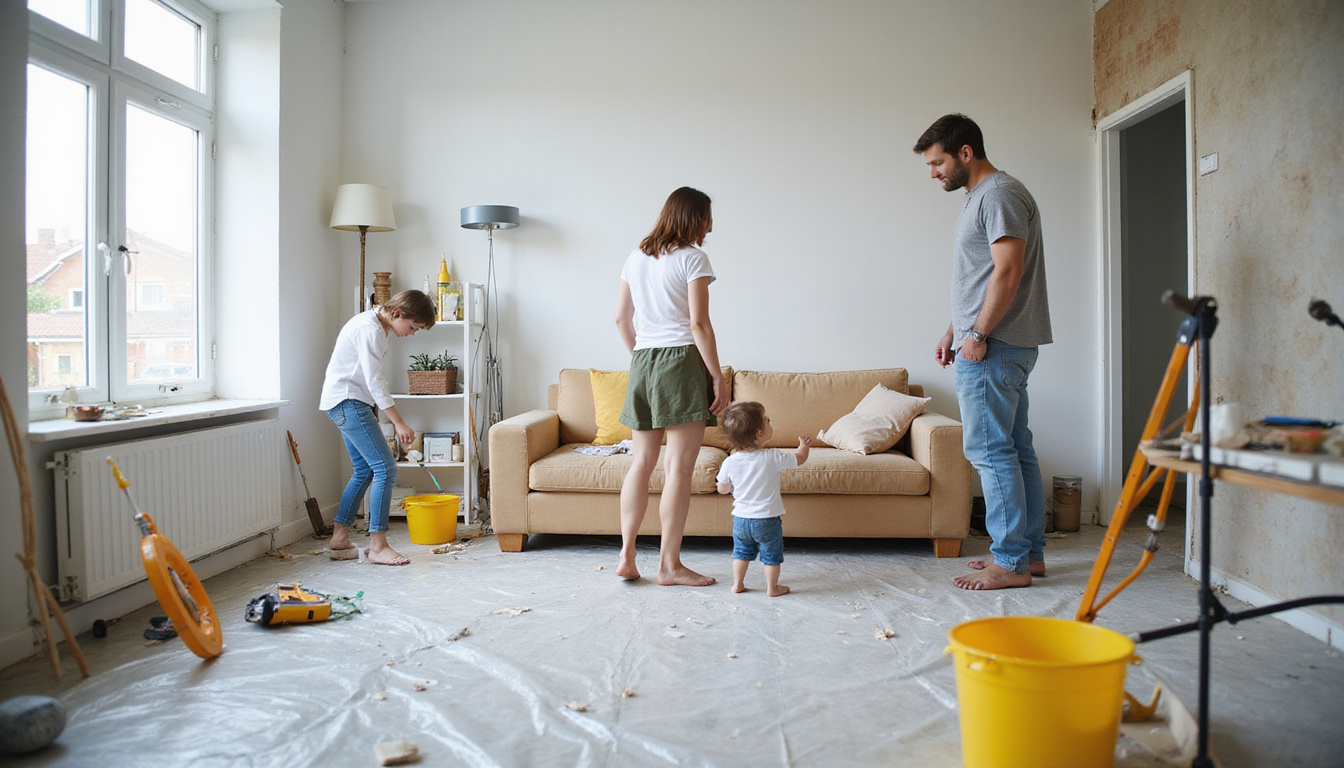
Renovation safety is about more than tools and materials—it’s also about how your family uses the house while work is underway.
Create kid- and pet-free zones
- Physically block access to work areas with gates or closed doors.
- Never leave tools, nails, screws, or small hardware on floors or low surfaces.
- Unplug and store power tools after use; remove batteries from cordless tools.
- Keep ladders and scaffolds inaccessible when not in use.
Adjust routines during the project
- Establish clear, safe walkways through the house.
- Move play areas, pet beds, and feeding stations far from the work zone.
- Consider boarding pets or arranging childcare during the noisiest, messiest phases.
For anyone with respiratory issues, plan their schedule to avoid being home during demolition, heavy sanding, or spraying.
6. Personal protective equipment (PPE) and tool safety
Proper PPE is a cornerstone of renovation safety, even for small DIY jobs.
Essential PPE for home renovation
Keep a dedicated safety kit that includes:
- Safety glasses or goggles
- Hearing protection (earplugs or earmuffs)
- Dust masks or respirators (with appropriate filters)
- Heavy-duty work gloves
- Steel-toe or reinforced work boots
- Knee pads for flooring work
- Hard hat for overhead work or structural changes
Wear the right gear every time—not just “when it looks dangerous.” Many injuries happen during “quick” or “simple” tasks.
Use tools correctly and maintain them
- Read manuals for new tools before use.
- Check cords, guards, and blades for damage before each session.
- Unplug tools before changing blades, bits, or attachments.
- Use the correct blade, bit, or accessory for the material you’re working on.
- Keep workspaces well-lit to avoid slips and miscuts.
Never work with power tools under the influence of alcohol, recreational drugs, or while excessively tired.
7. Structural and demolition safety
Structural changes and demolition are high-risk phases of any renovation.
Plan demolition carefully
Before you knock down any wall or tear out built-ins:
- Confirm whether walls are load-bearing with help from a structural engineer or experienced contractor.
- Locate and shut off utilities (electrical, gas, water) feeding the area.
- Identify plumbing and wiring paths to avoid accidental damage.
During demolition:
- Work from top to bottom to avoid collapse.
- Wear eye, respiratory, and hand protection.
- Remove debris regularly to prevent trip hazards and unstable piles.
Protect structural integrity
- Never cut joists, beams, or critical framing members without professional guidance.
- Use temporary supports if you’re removing load-bearing elements.
- Allow concrete, adhesives, and structural materials to cure as recommended before loading them.
8. Keep your home secure during renovation
Renovation safety also includes protecting your home from theft, weather, and unauthorized access.
Prevent break-ins and unauthorized access
- Do not leave tools or equipment visible from the street overnight.
- Lock all doors and ground-floor windows at the end of each workday.
- If contractors have keys or codes, track who has them and when they’re returned or changed.
- Use temporary locks or hasps on areas with valuable items.
Protect against weather and water damage
- Ensure temporary roof or wall openings are properly tarped and sealed each night.
- Monitor weather forecasts during major exterior work.
- Check that any exposed framing or materials are covered and elevated off the ground.
Water intrusion during renovation can create long-term structural and mold problems, so don’t leave openings vulnerable.
9. Daily clean-up and long-term health protection
Renovation safety continues after the tools are put away for the day—and even after the project is “finished.”
Establish a daily clean-up routine
- Sweep or vacuum with a HEPA-filter shop vac at the end of each day.
- Pick up all nails, screws, and offcuts.
- Store chemicals, paints, and adhesives in a cool, locked or high location.
- Remove trash and debris regularly instead of letting piles accumulate.
Post-renovation deep cleaning
Once work is complete:
- Clean walls, ceilings, and all horizontal surfaces with damp cloths.
- Change HVAC filters and consider duct cleaning if there was extensive dust.
- Wash soft furnishings (curtains, bedding, slipcovers) in adjacent rooms.
- Test new systems (smoke alarms, CO detectors, ventilation fans) to ensure they function correctly.
10. Quick renovation safety checklist
Use this renovation safety list as a reference before and during your project:
- Identify potential hazards (dust, lead, asbestos, mold, structural issues).
- Confirm permits and code requirements are in place.
- Set up work-zone containment (plastic sheeting, floor protection, vent covers).
- Plan for family and pet safety (restricted zones, routines, possible temporary relocation).
- Stock and wear appropriate PPE for every task.
- Verify electrical and fire safety (GFCIs, extinguishers, safe wiring).
- Handle demolition carefully (utilities off, structural assessment done).
- Secure tools, chemicals, and equipment after each workday.
- Maintain daily cleanup and waste removal.
- Conduct a final inspection and deep clean when the project is finished.
Print and adapt this checklist to your specific project so nothing critical falls through the cracks.
FAQ: Common questions about renovation safety
How do I ensure home renovation safety in an older house?
In older homes, start with hazard testing: check for lead paint, asbestos, and outdated wiring. Hire certified professionals for testing and abatement where needed, avoid DIY removal of suspected hazardous materials, and be extra cautious during demolition so you don’t disturb unknown pipes or wiring unexpectedly.
What are the most important renovation safety tips for DIY projects?
For DIY, focus on the basics: wear proper PPE, read tool manuals, turn off power and water before working on related systems, contain dust, and never rush tasks. Plan each workday in advance, know when a job is beyond your expertise, and bring in licensed professionals for complex electrical, structural, gas, or hazardous-material work.
How can I protect my family’s health during renovation work?
Limit exposure by sealing off work areas, improving ventilation, using HEPA filtration, and choosing low-VOC materials. Keep children, pets, and vulnerable family members out of the work zone, especially during demolition and sanding, and consider temporary relocation during the dustiest or most chemical-intensive phases.
Renovation can transform your home—but only if it doesn’t compromise your family’s wellbeing. By making renovation safety your top priority, you dramatically reduce the risk of injury, illness, and costly damage. Use the checklist in this guide before you swing a hammer or plug in a saw, and revisit it as your project progresses.
If you’re planning a renovation, now is the ideal time to build a detailed safety plan and, where needed, consult qualified professionals. Start your project with safety at the center, and you’ll not only get the beautiful space you’re dreaming of—you’ll enjoy the peace of mind that comes from knowing your home and family are truly protected.