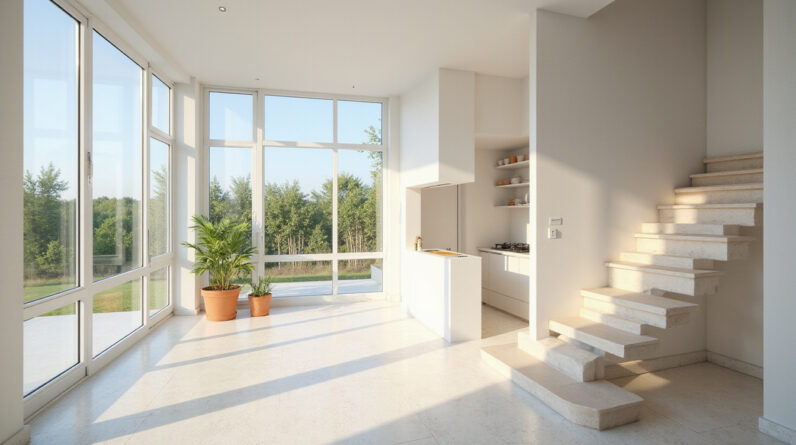


Choosing the right paint colors can change a room more dramatically than almost any piece of furniture. Designers know this, and they use specific shades and tricks to make tight spaces feel bigger, airier, and brighter—often without anyone realizing paint is doing most of the work.

If your bedroom feels cramped, your hallway looks like a tunnel, or your living room seems to be closing in on you, the solution may be as simple as opening a paint can. Below are the shades, strategies, and “secret” techniques designers rely on to visually expand any room.
Why paint colors change how big a room feels
Before getting into specific shades, it helps to understand why some paint colors make a room feel larger:
- Light reflection: Lighter colors bounce natural and artificial light around the room, helping walls visually “recede” instead of closing in.
- Color temperature: Cool tones (blues, greens, blue-grays) often feel more spacious and calm, while warm tones (beiges, creams) add softness without shrinking the space.
- Contrast level: High contrast (dark walls with bright trim) can break a room into pieces visually. Low contrast (similar tones on walls, trim, and ceiling) creates a more seamless, expansive look.
Designers combine these principles with specific, tried-and-true paint colors to fake more square footage.
The foolproof light neutrals designers swear by
Light neutrals are the most reliable paint colors for making rooms feel larger, and designers use them constantly—just in slightly different undertones depending on the space and light.
Soft white with a hint of warmth
All-white walls can feel clinical if the hue is too stark. Designers instead favor soft whites with a warm undertone that reflect light but still feel inviting.
Look for whites with:
- A touch of cream or beige
- LRV (Light Reflectance Value) in the mid-80s or higher
- Descriptors like “soft,” “cloud,” “linen,” or “eggshell” in the name
These are ideal for:
- Small living rooms and studios
- Hallways without much natural light
- Kitchens where you want a clean but cozy feel
Pro tip: Use the same white on walls, trim, and doors but in different sheens (eggshell on walls, satin or semi-gloss on trim). The slight sheen difference adds depth without creating harsh lines that visually chop up the space.
Pale greige for subtle depth
Greige—where gray meets beige—is one of those “designer paint colors” that quietly works almost everywhere. Light greige adds dimension so the room doesn’t feel flat, but still keeps things open.
Why designers love it:
- It works with both cool and warm furnishings
- It hides scuffs and imperfections better than stark white
- It looks sophisticated in both modern and traditional spaces
This is a top choice for:
- Small open-concept living/dining areas
- Apartments with mixed furniture styles
- Rooms that get changing light throughout the day
Cool, airy tones that visually push walls back
When designers want a room to feel larger and calmer, they often reach for cool-toned paint colors that mimic sky, water, or mist.
Barely-there blue
A very pale blue with a gray undertone is a classic trick, especially for small bedrooms and bathrooms. When the color is subtle enough, your brain reads it almost as a neutral—but the space feels fresher and more open.
Best uses:
- Small bathrooms (especially with white or light tile)
- Compact bedrooms that you want to feel peaceful
- Attics or loft spaces with sloped ceilings
To keep the look sophisticated, avoid bright “baby blue” and look for descriptions like “mist,” “ice,” “cloud,” or “haze” in the paint name.
Soft blue-green and sea-glass shades
A pale blue-green or sea-glass color can make tight rooms feel like a coastal retreat. Designers often use these in:
- Narrow entryways
- Tiny laundry rooms
- Small home offices
These paint colors:
- Cool down warm, yellow artificial light
- Pair well with white, wood, and black accents
- Feel breathable and less boxy
Again, subtlety is key. The closer the color is to a whisper of blue-green rather than a bold teal, the more it will expand the space.
Warm, light tones that still feel spacious
Not everyone wants cool tones. Designers also use warm paint colors that feel cozy but still make rooms appear larger.
Creams with a touch of yellow or peach
A light cream can be magic in north-facing rooms that tend to look gray and dull. Designers often choose creams that:
- Have a gentle yellow, peach, or beige undertone
- Don’t tip into “butter yellow” or “tan”
- Work with warm woods and natural textures
Great for:
- Small dining rooms
- Compact family rooms
- Basement spaces that need warming up
Paired with off-white trim and light curtains, cream walls can feel like sunlight even on cloudy days.
Soft blush and barely-there peach
Designers increasingly use ultra-soft blush and pale peach as sophisticated neutrals. When chosen carefully, these don’t read as “pink” but as a gentle glow that makes walls feel soft and receding.
They’re ideal for:
- Small bedrooms
- Dressing rooms or closets
- Powder rooms where you want flattering light
The trick is keeping the saturation low so the color is more of a warm undertone than a clear pink. In the right dose, these paint colors make skin tones look great and spaces feel inviting, not smaller.
Designer tricks: how placement and contrast change everything
Sometimes it’s not just which paint colors you use, but how and where you use them. Designers rely on a few clever techniques to visually change a room’s proportions.
Paint walls and trim in the same color
Using one color for both walls and trim (changing only the sheen) is a powerful way to make a room feel larger. It eliminates strong visual breaks that outline the room’s boundaries.
Benefits:
- Ceilings feel higher when there’s no stark trim line
- Doors and frames blend in, reducing visual clutter
- The eye reads the room as one continuous envelope
This works especially well with light neutrals, soft whites, and pale greiges.
Extend wall color onto the ceiling
Painting the ceiling a lighter version of the wall color—or even the same color—can make the room feel taller and more seamless, especially in small or awkward spaces.
Designers use this trick when:
- Ceilings are low and feel oppressive in bright white
- There are sloped or angled ceilings (like lofts or attics)
- The room is narrow and they want to blur the edges
A pale, cool color that wraps from walls onto the ceiling can feel like sky, enlarging the sense of volume.
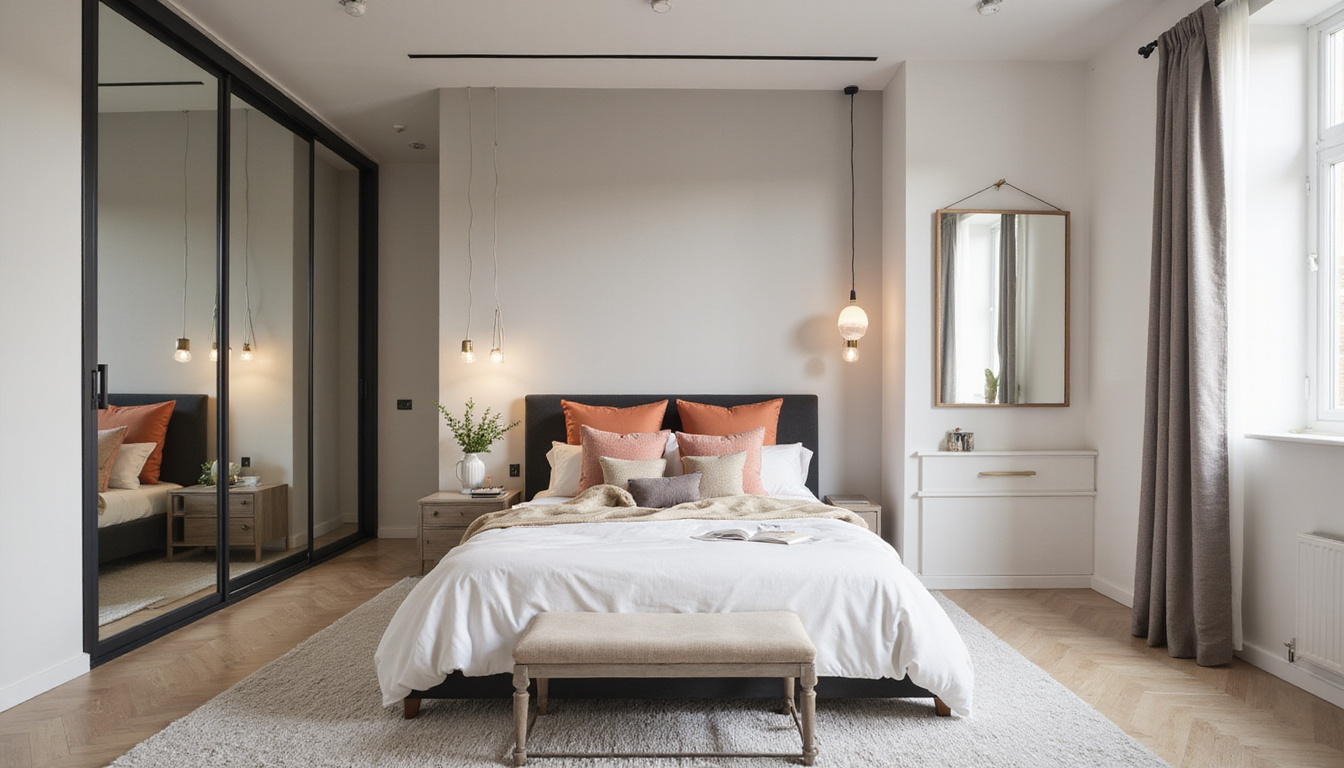
Use darker colors strategically
Surprisingly, designers do sometimes use darker paint colors in small rooms—but very deliberately.
For example:
- Painting the far short wall of a long, narrow room a deeper shade can visually “pull it closer,” making the space feel more balanced.
- Painting built-in shelves or an alcove a deeper color than the walls can add depth, so the wall appears to recede rather than crowd the room.
- Using a dark, saturated color below a chair rail with a lighter color above can anchor the room without closing it in.
The key is contrast balance: the majority of the surfaces should still be fairly light if the goal is to feel more spacious.
Choosing the right paint color for your specific room
The same paint can look completely different depending on light, flooring, and surroundings (source: U.S. Department of Energy – Lighting Basics). Designers always test before committing. You can, too.
Here’s a simple process:
-
Study your light
- North-facing: Cooler, flatter light; may need warmer paint colors.
- South-facing: Warm, abundant light; can handle cooler or more neutral tones.
- East-facing: Cooler in the afternoon, warmer in the morning.
- West-facing: Shadowy and cool in the morning, golden and warm in the afternoon.
-
Narrow it to 3–4 candidates
Choose a few light neutrals or cool/warm shades based on how you want the room to feel: airy, cozy, bright, or calm. -
Test large samples
Paint big swatches on multiple walls or use peel-and-stick samples. Look at them:- Morning, midday, and evening
- With lights on and off
- Next to floors, trim, and large furniture
-
Check contrast with trim and ceiling
Ask yourself:- Do I want soft, low-contrast (more expansive)?
- Or crisp, high-contrast (more structured but potentially smaller-feeling)?
-
Decide on sheen
- Matte/flat: Hides imperfections, feels soft—good for ceilings and low-traffic areas.
- Eggshell: A go-to for most walls; slight sheen reflects some light.
- Satin/semi-gloss: Great for trim and doors; bounces light and adds a subtle frame.
Common mistakes that make small rooms feel smaller
Avoid these pitfalls if your goal is to visually enlarge your space:
- Too much contrast: Dark walls with bright white trim can be beautiful, but in very small rooms they emphasize boundaries and shrink the feel.
- Overly saturated colors: Strong reds, oranges, or jewel tones can be stunning but often work best as accents, not full-room colors in tight spaces.
- Ignoring undertones: A “neutral” beige may suddenly look pink, green, or yellow in your room. Undertones that clash with your floors or fabrics can make the space feel chaotic and cramped.
- Different colors in every small, connected room: Choppy color changes can make an apartment feel like a series of boxes. Designers often use one main color throughout, then adjust depth or use accent walls very sparingly.
Quick ideas: paint color strategies that instantly open up space
Use these designer-inspired approaches in your home:
- Choose a light neutral for the majority of your walls.
- Paint trim and doors the same color or just a half-step lighter/darker for low contrast.
- Consider a soft blue or blue-green in small bedrooms and baths.
- Try cream or soft blush in darker rooms that need warmth.
- Wrap small spaces (like entryways) in a single, pale color from walls to ceiling.
- Keep ceilings lighter or equal in depth to the walls—rarely darker when you’re chasing openness.
- Use darker shades only on accent elements (built-ins, the short wall of a long room, the back of shelves).
FAQ: Using paint colors to make rooms look bigger
Q1: Which paint colors make a small room look bigger?
Light, low-contrast paint colors work best to visually enlarge a small room. Soft whites, pale greiges, light creams, and very subtle blues or blue-greens reflect more light and help walls recede. The fewer harsh transitions you have between wall, trim, and ceiling, the more expansive the space will feel.
Q2: What are the best paint colors for a small living room?
For a small living room, designers often choose a light greige or warm white as the main color, sometimes with a slightly deeper shade on built-ins or the far wall to add depth. If your room is dark or north-facing, a creamy white or soft beige warms things up while still keeping the space open. In brighter rooms, a pale gray or blue-gray can feel calm and airy.
Q3: Do dark paint colors ever make a room feel larger?
Dark paint colors can make a room feel more dramatic and cocoon-like, but they usually don’t make it feel larger. That said, designers sometimes use very dark paint on all walls and the ceiling in extremely small rooms (like powder rooms) to create a jewel-box effect where the lack of contrast blurs the edges. For most spaces where the goal is openness, though, lighter tones are more effective.
Thoughtful use of paint colors is one of the fastest, most affordable ways to transform how big your home feels—without knocking down a single wall. If you’re ready to make your rooms look brighter and more spacious, start by picking two or three of the light, designer-approved shades described here and testing them in your own space. Then commit to a cohesive palette, reduce harsh contrasts, and let color do the heavy lifting.
Start with your smallest or darkest room, choose a light, low-contrast paint scheme, and give it a weekend makeover—you’ll see how much bigger your home can feel, and it may inspire you to keep going room by room.