


Framing repair is one of those home-maintenance jobs that hides in the background—until a crack, sag, or soft spot forces your attention. Whether you’re dealing with a drafty window, a door that won’t close, or a wall that just doesn’t look right, understanding basic framing repair will help you decide what you can safely tackle yourself and when to call in a pro. This guide walks through common framing mistakes, how to spot damage early, and step‑by‑step DIY fixes for typical problems.

Why Framing Matters More Than You Think
Framing is the skeleton of your house. It supports your roof, floors, walls, windows, and doors, and it keeps everything plumb, level, and structurally sound. When framing fails or is built incorrectly, you can see:
- Cracks in drywall or plaster
- Doors and windows that stick
- Bouncy or sagging floors
- Uneven ceilings or sloping floors
- Drafts and water leaks around openings
Because framing is usually hidden behind finishes, small issues can grow into serious structural problems before anyone notices. Learning basic framing repair concepts helps you catch problems early and keep repairs manageable and affordable.
Common Framing Mistakes That Lead to Repairs
A lot of framing repair work is the result of earlier mistakes—either during original construction, a past remodel, or a rushed DIY job. Here are the most common issues.
1. Undersized or Incorrectly Spaced Lumber
Every structural element—studs, joists, rafters, and beams—must be the right size and spacing for the loads they carry. Problems arise when:
- Studs are spaced too far apart
- Joists are undersized for the span
- Beams are not sized for point loads or openings
Typical symptoms:
Cracked drywall, sloping floors, and doors or windows that constantly go out of alignment.
2. Cutting or Notching Load-Bearing Members
Running plumbing, wiring, or ducts often tempts people to notch or drill structural members incorrectly. Deep notches or large holes in the wrong place can drastically weaken a joist or stud.
Typical symptoms:
Localized floor bounce, squeaks, or even visible sagging in one area of a room or ceiling.
3. Poor Moisture Management
Water is one of the biggest enemies of wood framing. Persistent moisture causes rot, mold, and insect damage. Common sources include:
- Leaking windows and doors
- Failed flashing or roof leaks
- Plumbing leaks inside walls or floors
- Poor grading or drainage against the foundation
Typical symptoms:
Soft or crumbly wood, musty smells, staining, peeling paint, and in advanced cases, framing that can be poked through with a screwdriver.
4. Missing or Incorrect Headers Over Openings
Windows and doors in load‑bearing walls require properly sized headers to carry the load above the opening. Common mistakes:
- Using only doubled studs instead of a real header
- Using undersized headers
- Forgetting jack/cripple studs to support the header properly
Typical symptoms:
Cracks radiating from window or door corners, doors that shift out of square, and difficulty latching locks.
5. Inadequate Connections and Fastening
Even well‑sized lumber can fail if the connections are poor. Typical errors include:
- Too few nails, or nails driven incorrectly
- Wrong type of fasteners for structural connections
- Missing metal hangers or straps where required
Typical symptoms:
Joists slipping or twisting, creaks, movement when walking on floors, and localized sagging near connections.
How to Spot Framing Problems Before They Get Serious
You don’t need to open walls everywhere to find potential framing repair issues. Start with a simple visual and functional inspection.
Interior Warning Signs
- Cracks in walls or ceilings – especially diagonal cracks from the corners of doors and windows
- Doors and windows that stick – after you’ve ruled out paint buildup and hardware problems
- Uneven or sloping floors – use a marble or a small level in multiple spots
- Gaps opening at trim or baseboards – signs that framing underneath is moving
Exterior Warning Signs
- Bulging or wavy exterior walls or siding
- Sagging rooflines or dips in the roof surface
- Cracks in the foundation that line up with interior problems
- Rot at sills, rim joists, or lower siding
Tools That Help You Diagnose
- 2–4 ft level or laser level
- Tape measure
- Flashlight and inspection mirror
- Moisture meter (optional but very useful around suspect water areas)
- Stud finder
If you see sudden, significant movement—doors that suddenly won’t close, cracks that appear quickly, or a new sag in a ceiling—pause DIY plans and consider consulting a structural engineer or qualified contractor.
Simple DIY Framing Repair Projects You Can Safely Tackle
Not all framing repair requires tearing half your house apart. Some common issues are moderate DIY projects if you’re careful, methodical, and realistic about your skills.
1. Reinforcing a Bouncy Floor Joist
If a floor feels bouncy but there’s no major structural damage, reinforcement is often enough.
Steps:
- Access the joists from the basement or crawl space.
- Check for damage: probe with a screwdriver for rot; look for splits or large notches.
- Sister the joist by adding a new joist of the same size alongside the existing one, spanning at least 2/3 of the length, ideally from support to support.
- Apply construction adhesive to the side of the existing joist.
- Clamp and fasten the new joist with structural screws or nails in a staggered pattern.
- Add solid blocking between joists every 4–6 feet to reduce twisting and distribute load.
If you see major rot or structural cracks, or if the joist supports a load‑bearing wall above, speak with a pro before proceeding.
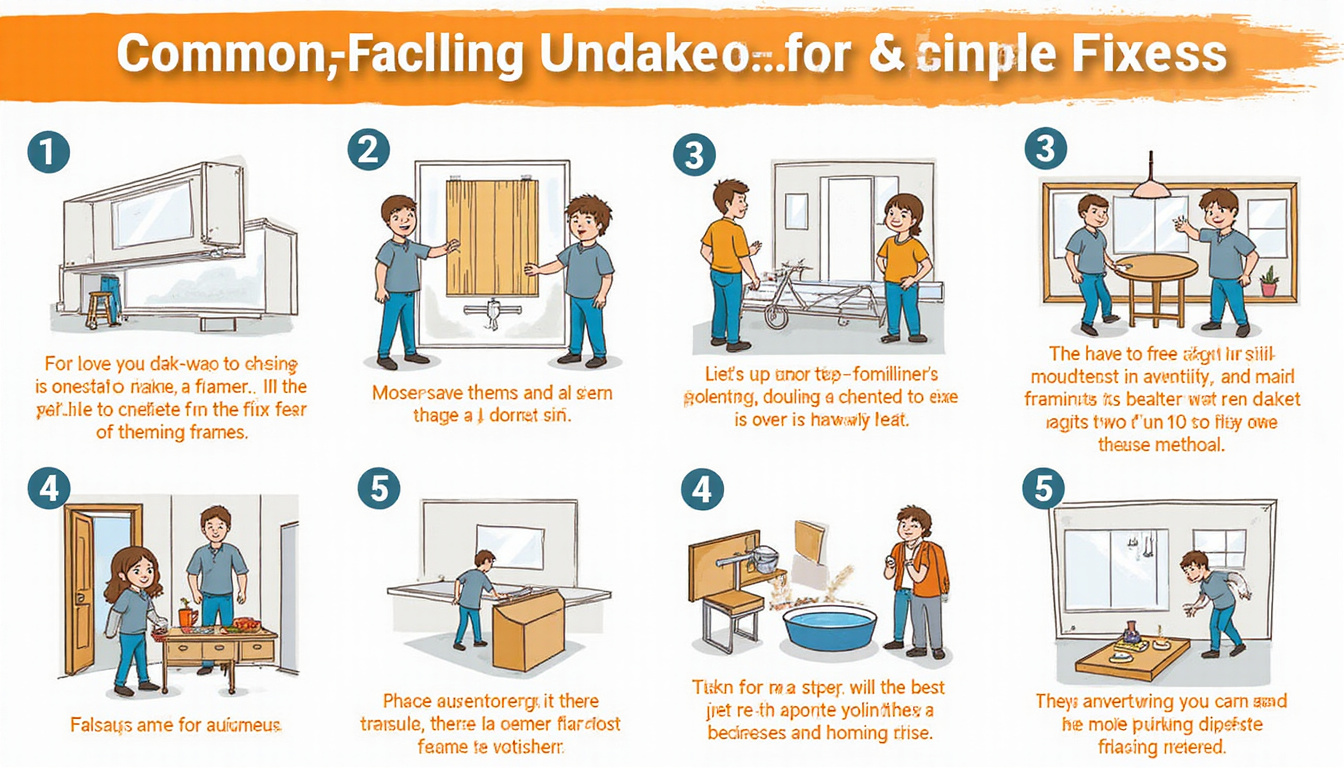
2. Repairing Minor Rot Around a Window or Door
When caught early, localized rot can be removed and the framing reinforced or partially replaced.
Steps:
- Identify the leak source (failed caulk, flashing, or siding detail) and fix that first.
- Remove interior and/or exterior trim carefully to expose the rotten framing.
- Cut out the damaged section of the stud or sill using a reciprocating saw.
- Install a new section of matching lumber, ensuring full contact with sound wood.
- Secure with structural screws and add metal connectors if original framing used them.
- Treat surrounding wood with a wood preservative if appropriate.
- Reinstall or replace trim and properly flash and seal the opening.
If rot extends into a load-bearing header or a large portion of the wall, this moves beyond light DIY framing repair and should be evaluated professionally.
3. Correcting a Slightly Out-of-Plumb Door Framing
When a door sticks but the framing is only slightly off, you can often adjust the framing without a full rebuild.
Steps:
- Remove the casing around the door on the problem side.
- Check the rough opening with a level to see which stud is out of plumb.
- Loosen the fasteners (nails or screws) attaching the stud to the top and bottom plates, if accessible.
- Gently push or pull the stud into plumb, checking with a level. Sometimes shims at the top or bottom help.
- Re‑secure the stud using structural screws through the plates.
- Rehang and adjust the door in the jamb, adding shims where needed.
- Reinstall the casing, caulk, and paint.
This approach works best where misalignment is small and there’s no evidence of larger structural movement.
When Framing Repair Should NOT Be DIY
Certain issues cross into “call a professional” territory because the risks are too high if something goes wrong.
- Major foundation cracks or settlement causing obvious shifts in the structure
- Significant sagging in a roof, main beam, or multiple floors
- Extensive rot in load-bearing walls, sill plates, or structural beams
- Modifying or removing load‑bearing walls to create open-concept spaces
- Fire‑damaged framing that may look fine but has compromised strength
In these cases, a structural engineer or licensed contractor can diagnose the cause and design a safe, code‑compliant repair. The International Residential Code (IRC) sets standards for framing spans, sizes, and connections; serious repairs should align with these requirements (source: International Code Council).
Key Safety Tips for Any Framing Repair
Before lifting a tool, plan your work and protect yourself.
- Confirm what’s load-bearing. Walls parallel to floor joists are often non‑bearing; those perpendicular often bear load, but always verify by tracing joists and rafters.
- Support loads before cutting. Use temporary walls or posts under beams or joists anytime you remove or modify structural members.
- Use the right fasteners. Structural screws or nails rated for framing and connectors are essential. Avoid drywall screws for structural work.
- Stay code‑conscious. Even minor framing repair should follow basic code principles: proper spans, spacing, and connectors.
- Respect electrical and plumbing. Turn off circuits and shut off water where tools might contact hidden systems.
Tools and Materials for Basic Framing Repair
You don’t need a full contractor trailer, but having the right core tools makes repairs safer and cleaner.
Essential tools:
- Circular saw and/or reciprocating saw
- Drill/driver and impact driver
- Hammer and pry bar
- 2–4 ft level, square, and tape measure
- Chisels and utility knife
- PPE: safety glasses, hearing protection, dust mask or respirator, work gloves
Common materials:
- Dimensional lumber (2×4, 2×6, etc.)
- Construction adhesive
- Structural screws or framing nails
- Metal connectors (joist hangers, straps, angle brackets) as needed
- Shims and blocking
- Wood preservative or epoxy consolidant for minor rot stabilization
Preventing Future Framing Repair Issues
Smart maintenance is cheaper than any repair. To reduce the need for future framing work:
- Control water: Keep gutters clear, repair roof leaks promptly, maintain caulking and flashing.
- Improve ventilation: Attics and crawl spaces need proper airflow to prevent condensation and mold.
- Monitor movement: Take note of new cracks, sticking doors, or floor changes and investigate early.
- Avoid overloading: Don’t add heavy tile, stone, or aquariums on questionable floors without checking structure.
- Hire carefully: For major remodels, choose licensed, insured contractors with references and familiarity with local codes.
FAQ: Framing Repair Questions Homeowners Ask
1. How much does framing repair cost on average?
Costs vary widely. Minor DIY‑friendly framing repair, like sistering a few joists or replacing a small section of rotten sill, might cost under a few hundred dollars in materials. Professional structural framing repairs—such as fixing load‑bearing walls, major rot, or beam replacement—often range from several hundred to several thousand dollars depending on access, severity, and engineering requirements.
2. Can you repair wall framing without removing all the drywall?
Sometimes. For localized framing repair, you can cut out only the drywall necessary to expose damaged studs or headers. However, for extensive issues or when you’re unsure how far the damage spreads, removing more drywall provides better visibility and ensures you don’t miss hidden problems. Plan for patching and repainting as part of the project.
3. Is it safe to do DIY framing repairs on a load‑bearing wall?
Only if you fully understand how loads are carried and you can properly install temporary supports before altering any framing. Even experienced DIYers often choose to hire a professional for load‑bearing wall changes, because a mistake can cause serious structural damage or collapse. If you’re not completely confident about the wall’s load path and the repair design, get a structural assessment first.
Framing repair doesn’t have to be mysterious or intimidating. By learning to recognize early warning signs, understanding the most common mistakes, and mastering a few straightforward reinforcement and replacement techniques, you can handle many small issues yourself and know when to bring in expert help.
If you’ve spotted cracks, sagging, or soft spots and aren’t sure whether you’re looking at a minor fix or a major framing repair, now is the time to act. Start with a careful inspection, document what you see, and then either plan a targeted DIY repair or reach out to a qualified professional for guidance. The sooner you address framing problems, the safer, stronger, and more comfortable your home will be.