

Exterior Lighting Ideas That Instantly Transform Your Home’s Curb Appeal
Exterior lighting is one of the fastest, most effective ways to elevate your home’s curb appeal—often in a single weekend. With the right exterior lighting plan, you can highlight architecture, improve safety, extend outdoor living time, and make your entryway feel warm and welcoming.

Below are practical, stylish exterior lighting ideas that work for a range of homes and budgets, along with tips to get them right the first time.
Why Exterior Lighting Matters So Much
Thoughtful exterior lighting does more than just help you see in the dark:
- First impressions: A well-lit home looks cared for, secure, and inviting.
- Safety and security: Illuminated paths, steps, and entry points reduce trips and deter intruders.
- Architectural drama: Light can sculpt textures and shadows, making details stand out.
- Evening usability: Patios, porches, and yards become usable after sunset.
According to the American Lighting Association, good outdoor lighting design can significantly improve both aesthetics and perceived value of a home (source).
Start at the Front Door: Entryway Lighting That Welcomes
Your front entrance is the focal point of curb appeal. Exterior lighting here sets the tone for your entire home.
1. Statement Sconces on Either Side of the Door
Flank the front door with wall sconces that complement your home’s style:
- Traditional homes: Lantern-style sconces with clear or seeded glass.
- Modern homes: Sleek, rectangular fixtures with frosted glass or integrated LEDs.
- Farmhouse or cottage: Black or bronze gooseneck fixtures with warm bulbs.
Sizing tip: Each fixture should be about 1/4 to 1/3 the height of your door. If you only have space for one sconce, place it on the handle side of the door for better visibility.
2. Overhead Pendant or Flush Mount
If you have a covered porch, add a hanging pendant or flush mount fixture:
- Use a single bold pendant for a high-ceiling porch.
- Choose a flush or semi-flush mount for standard-height ceilings.
Match the finish and style to your sconces for a cohesive look, but don’t be afraid to choose a slightly different shape or glass style to add visual interest.
Light the Path: Walkway and Driveway Illumination
Path and driveway exterior lighting improve safety and give your home a polished, magazine-worthy look.
3. Low-Profile Path Lights
Install low-voltage or solar-powered path lights along walkways:
- Stagger fixtures on opposite sides of the path for a natural, rhythmic look.
- Space them about 6–8 feet apart to avoid a “runway” effect.
- Choose warm white bulbs (2700K–3000K) for a soft, welcoming glow.
Avoid pointing path lights straight upward; aim them downward to illuminate the ground and reduce glare.
4. In-Ground or Recessed Driveway Lights
For a more modern, high-end feel:
- Use in-ground LED pucks placed along the edges of the driveway.
- Or install recessed wall lights set into retaining walls or low brick borders.
These options provide subtle guidance for vehicles and guests without cluttering the visual line of your front yard.
Highlight Architecture with Accent Exterior Lighting
Accent exterior lighting turns your house into the star of the block after dark.
5. Uplighting for Dramatic Facades
Uplighting uses ground-mounted fixtures aimed upward:
- Highlight columns, stonework, arches, or gables.
- Place lights about 12–24 inches away from the wall, aiming at a 30–45-degree angle.
- Use narrow beam spreads on tall, narrow features and wider beams on broad surfaces.
A few well-placed uplights are more impactful than many small, scattered fixtures.
6. Downlighting for Soft, Natural Illumination
Downlighting mimics the effect of moonlight:
- Mount fixtures under eaves, on second-story walls, or high in trees.
- Aim lights downward to wash over walls, entryways, or garden beds.
- Use shielded or “full cut-off” fixtures to avoid light spillage into neighboring homes.
This technique creates soft shadows and makes textures like brick, siding, and stone come alive at night.
Make the Porch a Destination, Not Just a Pass-Through
Your front porch can act as an outdoor living room if it’s properly lit.
7. Layered Lighting on the Porch
Combine multiple types of exterior lighting for comfort and flexibility:
- Ceiling fixture: General overhead light for brightness when needed.
- Wall sconces: Flanking the door or along walls for ambient glow.
- Accent lights: Small step lights or LED strips under railings for safety.
Put different zones on separate switches or dimmers so you can adjust brightness depending on the time of night and activity.
8. Decorative String Lights or Lanterns
For a relaxed, welcoming vibe:
- Hang string lights around porch ceilings, railings, or beams.
- Use battery or solar lanterns on side tables or steps.
Choose warm, dimmable LED string lights rated for outdoor use to ensure durability and the right mood.
Illuminate Landscaping and Trees
Landscaping-focused exterior lighting adds depth and character, plus it showcases the money you’ve invested in plants and hardscaping.
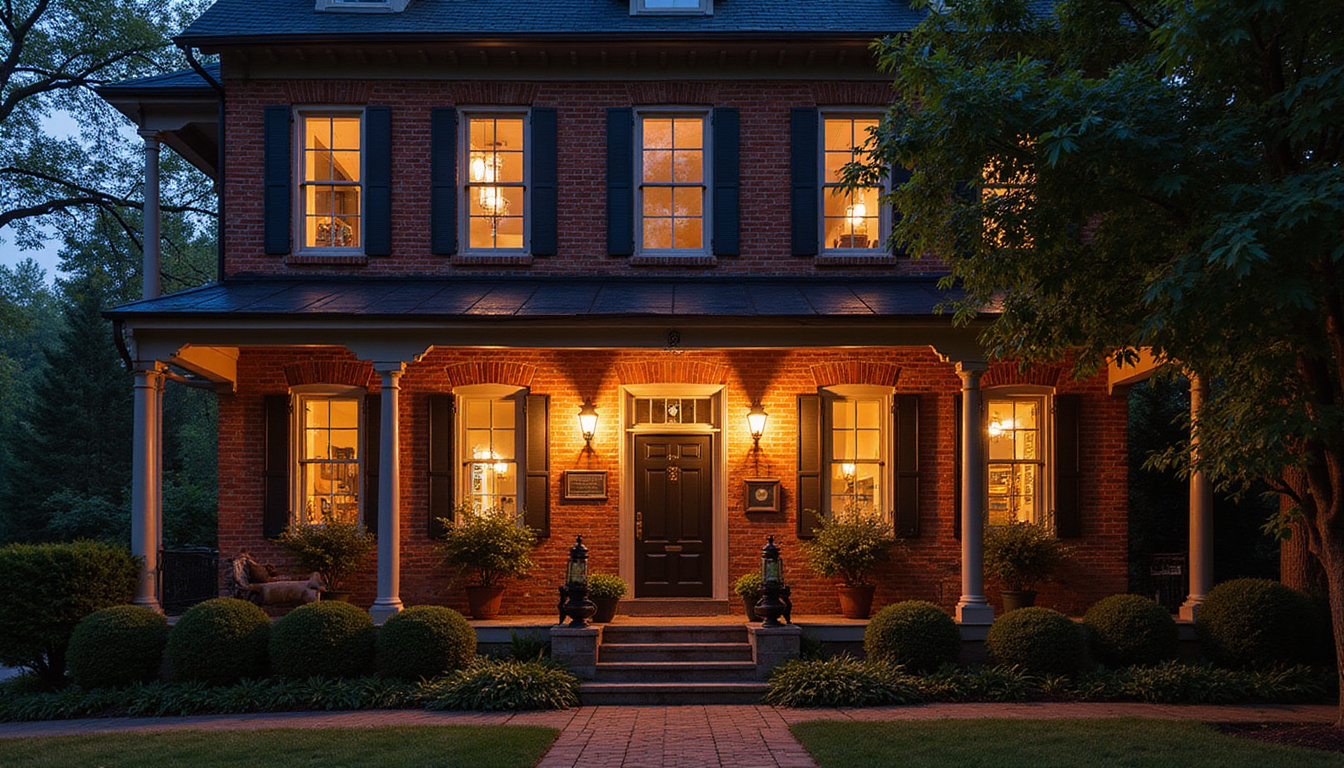
9. Tree Uplighting and “Moonlighting”
For mature trees:
- Place one or more spotlights at the base, angled up the trunk and into the canopy.
- For dense trees, use multiple fixtures around the tree for an even glow.
For a more natural effect, install downlights high in the branches aimed downward. This “moonlighting” casts soft, dappled light on the ground, paths, and seating areas below.
10. Garden Bed and Feature Lighting
Accent flower beds, water features, and sculptures:
- Use small stake lights to graze over low shrubs and plants.
- Aim spotlights at statues, fountains, or feature walls.
- Keep outputs low to avoid overpowering the scene—subtle is almost always better in landscape lighting.
Add Safety Lights Where You Need Them Most
Good exterior lighting design is beautiful, but it’s also practical.
11. Step and Stair Lighting
Poorly lit steps are a safety hazard and liability:
- Install recessed step lights directly in risers.
- Or place small LED strips under the lip of each tread.
- Another option: side-mounted lights on railings or walls beside the stairs.
Aim for uniform, gentle light that clearly defines each step without glare.
12. Motion-Activated Security Lights
Security-focused exterior lighting doesn’t have to look industrial:
- Choose sleek, dual-head motion lights in finishes matching your trim or gutters.
- Aim them toward driveways, side yards, and rear entries.
- Adjust sensitivity and timing so lights only come on when truly needed.
Modern fixtures often include integrated cameras or smart features so you can monitor activity from your phone.
Create an Outdoor Room with Backyard & Patio Lighting
Even though curb appeal focuses on what’s seen from the street, rear-yard exterior lighting still contributes to your home’s overall perceived value and livability.
13. Layered Lighting for Patios and Decks
Think of your patio like an indoor living space:
- Ambient lighting: Wall lights, post lights, or ceiling fixtures for general illumination.
- Task lighting: Focused light near grills or outdoor kitchens.
- Accent lighting: String lights, lanterns, or niche lighting around seating areas.
Add dimmers wherever possible so you can go from “family dinner” brightness to “late-night conversation” softness with one adjustment.
14. Focal Points: Fire Pits and Water Features
Draw the eye (and guests) toward a focal point:
- Use low-level lights around a fire pit to support, not compete with, the flames.
- Light water features from below or behind for reflections and movement.
- Add small spotlights to highlight interesting stonework or sculptural elements.
Smart and Sustainable Exterior Lighting Choices
Modern exterior lighting doesn’t need to be energy-hungry or high-maintenance.
15. Choose LEDs and Warm Color Temperatures
For most homes:
- Opt for LED bulbs and fixtures to reduce energy use and replacement frequency.
- Use 2700K–3000K color temperature for a warm, inviting look that flatters skin tones and materials.
- Keep brightness moderate; too much light can feel harsh and actually reduce visibility due to glare.
16. Embrace Smart Controls and Timers
Smart exterior lighting adds convenience and security:
- Use dusk-to-dawn sensors so lights automatically turn on at night and off in the morning.
- Add timers for path and porch lighting.
- Integrate with a smart home system so you can control lights from your phone, even away from home.
These tools ensure your curb appeal is consistent without you having to remember a thing.
Basic Exterior Lighting Planning Checklist
As you plan, walk around your property at dusk and make notes. Use this quick checklist:
- Identify dark, unsafe areas: steps, paths, driveways, entrances.
- Choose 2–3 architectural features to highlight: columns, stonework, gables.
- Select a few trees or landscape areas to accent.
- Decide on your main gathering zones: porch, patio, deck, fire pit.
- Pick fixture styles and finishes that complement your home’s architecture.
- Use warm LED lighting, smart controls, and dimmers where possible.
- Avoid over-lighting; aim for layers and subtlety rather than uniform brightness.
FAQ: Common Questions About Exterior Lighting
Q1: What’s the best exterior lighting for a front yard to boost curb appeal?
The best front yard lighting is a combination of entryway sconces, path lights, and architectural accent lights. Start by ensuring your front door and steps are clearly illuminated, then add low-voltage path lights and a few uplights on key features like trees or stonework for depth and drama.
Q2: How bright should outdoor house lights be for everyday use?
For most residential exterior lighting, aim for 400–800 lumens per fixture for wall sconces and 100–300 lumens for path and accent lights. Use warmer color temperatures (2700K–3000K) and consider dimmers so you can adjust brightness based on activity and time of night.
Q3: Are solar exterior lights good enough for driveways and walkways?
Modern solar exterior lighting can be effective for walkways and garden accents, especially in sunny climates. For critical safety areas like stairs or frequently used driveways, low-voltage wired lighting is usually more reliable and consistent. Many homeowners use a mix—wired for key safety zones and solar for decorative or supplemental light.
Transform Your Curb Appeal with a Thoughtful Lighting Plan
You don’t need a full remodel to make your home look dramatically better from the street. Strategic exterior lighting can instantly upgrade curb appeal, make your property safer, and extend how long you enjoy your outdoor spaces every day.
Start with the essentials—front door, paths, and key architectural features—then layer in landscape and porch lighting for a finished look. If you’re unsure where to begin, consider consulting a professional lighting designer or electrician to help you create a cohesive plan and safely install fixtures.
Ready to transform your home after dark? Walk your property at night, make a simple list of priorities, and choose a few of these exterior lighting ideas to implement this season. With just a weekend’s work, your home can stand out on the block—for all the right reasons.