


If you’ve ever felt stiff, achy, or “stuck” in your own body, the problem might not be your muscles or joints—it might be your fascia. This thin but powerful connective tissue surrounds and supports virtually everything in your body, and when fascia becomes tight or dehydrated, it can limit movement and cause pain. Understanding fascia, how it works, and how to care for it is one of the fastest ways to unlock pain-free movement and speed up recovery.

What Exactly Is Fascia?
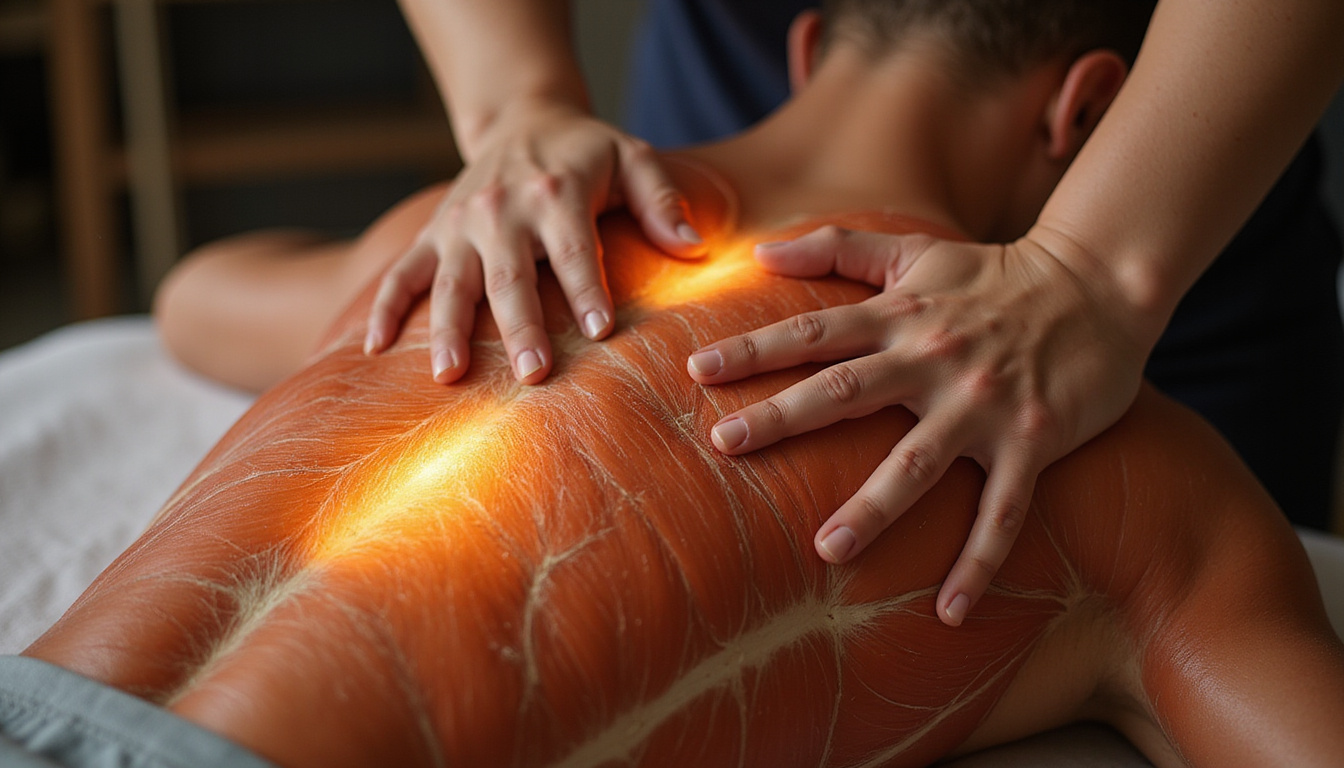
Fascia is a web-like network of connective tissue made primarily of collagen. It weaves through your entire body, wrapping around and between muscles, bones, nerves, organs, and blood vessels, forming a continuous 3D support system from head to toe.
You can think of fascia as:
- A full-body wetsuit under your skin
- A communication network, helping transmit forces and signals
- A support system, maintaining structure, posture, and alignment
There are several main types of fascia:
- Superficial fascia – just under the skin, involved in fluid movement and temperature regulation
- Deep fascia – surrounds and connects muscles, tendons, ligaments, and bones
- Visceral fascia – supports and suspends organs
When fascia is supple and hydrated, it glides smoothly. When it’s tight, stuck, or inflamed, it can restrict movement and contribute to pain almost anywhere in the body.
How Fascia Affects Pain and Movement
Fascia isn’t just passive wrapping—it’s highly innervated with nerve endings and mechanoreceptors. That means it can sense tension, pressure, and movement and can be a major source of pain when something goes wrong.
Fascial Restrictions and “Stuck” Tissue
Fascia can become:
- Dehydrated – losing its slippery, gel-like quality
- Adhered – sticking to nearby tissue instead of gliding over it
- Thickened or scarred – after injury, surgery, or chronic overuse
When this happens, common symptoms include:
- Stiffness that doesn’t respond well to stretching
- Pain that feels diffuse or hard to pinpoint
- Reduced range of motion in joints
- “Pulling” sensations along a line of movement
Because fascia forms continuous lines from head to toe, a restriction in one area can show up as pain somewhere else. For example, tight fascia in the calves may influence hamstring tension or lower back discomfort through connected fascial chains.
Fascia and Posture
Fascia helps maintain your posture by distributing tension throughout the body. Chronic postural habits—like slouching at a desk or looking down at your phone—can gradually create fascial imbalances. Over time, the body “sets” into these positions, making it harder to stand tall or move freely.
Working with fascia can help:
- Rebalance tension
- Improve alignment
- Reduce compensatory strain on joints and muscles
The Role of Fascia in Recovery and Performance
Athletes and active people are paying more attention to fascia because it dramatically influences performance and recovery.
Force Transmission and Strength
Fascia transmits force between muscles and across joints. When your fascial network is healthy and well-organized:
- Force from one muscle can efficiently transfer to others
- Movements feel more powerful and coordinated
- You can generate strength without excessive strain
Research in connective tissue science shows that fascia contributes to elastic energy storage and recoil—key for activities like running, jumping, and cutting movements (source: Fascia Research Society).
Recovery, Soreness, and Injury Risk
Healthy fascia supports faster recovery because:
- It promotes better circulation and lymphatic drainage
- It helps evenly distribute load across tissues
- It allows muscles to contract and relax efficiently
When fascia is compromised, you may notice:
- Increased muscle soreness
- Slower recovery after workouts
- More frequent “nagging” aches and pains
- Higher risk of tendinopathies and overuse injuries
Supporting fascial health is one of the best “hidden levers” for staying active and resilient over the long term.
Everyday Habits That Damage Fascia
You don’t need a major injury to end up with fascial problems. Small, repeated habits can quietly degrade fascia over time.
Common culprits include:
- Sedentary lifestyle – long hours sitting with minimal movement
- Repetitive motions – same patterns day after day without variety
- Poor hydration – fascia needs fluid to stay supple and slide
- Chronic stress – keeps muscles and fascia under low-grade tension
- Overtraining – high load without enough recovery or tissue care
- Old injuries or surgeries – scars can disrupt normal fascial glide
The good news: simple, consistent practices can restore fascial health and lead to noticeable improvements in how you feel and move.
Techniques to Keep Fascia Healthy and Pain-Free
There is no single “magic” method. The best approach to fascia is a blend of movement, loading, hydration, and manual techniques.
1. Move Often, Not Just Hard
Fascia responds especially well to frequent, varied movement rather than occasional intense workouts.
Incorporate:
- Gentle stretching throughout the day
- Walking breaks, especially if you sit a lot
- Rotational and side-bending movements for the spine
- Multi-directional lunges and reaches
Think of it as “brushing your fascia” with movement to prevent stiffness.
2. Hydrate Inside and Out
Fascia is largely water. To keep it gliding:
- Drink water consistently through the day
- Eat water-rich foods (fruits, vegetables, broths)
- Use movement to “pump” fluids through tissues
Dehydrated fascia feels sticky and rigid; well-hydrated fascia feels springy and resilient.
3. Myofascial Release and Self-Massage
Self-massage tools can help relieve fascial tension and adhesions:
- Foam rollers
- Massage balls or lacrosse balls
- Soft, textured rollers
For self-myofascial release:
- Choose a tender or tight area.
- Apply gentle, sustained pressure—avoid grinding.
- Breathe slowly, hold 30–90 seconds per spot.
- Move slowly along the tissue line, not just one point.
Aim for mild discomfort, not pain. Overdoing it can irritate tissues instead of helping.
4. Dynamic Stretching and Fascial Lines
Instead of only static stretches, add dynamic, whole-chain movements:
- Arm sweeps combined with side lunges
- Diagonal reaches across the body
- Controlled, spiral movements of the trunk
These motions lengthen fascia along long lines, similar to how you’d stretch a net, not just a single string.
5. Strength Training with Full-Body Integration
Fascia thrives under progressive, well-distributed load. Strength training that uses multiple joints and planes of motion supports fascial integrity:
- Squats and deadlifts with good form
- Push–pull patterns (rows, presses)
- Carries (farmer’s carries, suitcase carries)
- Rotational exercises (chops, lifts, controlled twists)
Think of integrating the body as one system rather than isolating single muscles.
6. Breathing and Nervous System Regulation
Since fascia responds to the nervous system, chronic tension and stress can keep it tight.
Support relaxation by:
- Practicing slow, diaphragmatic breathing
- Taking “downshift” breaks away from screens
- Trying gentle yoga, tai chi, or restorative practices
Reducing background tension allows fascia to soften and rehydrate more easily.
When to Work with a Fascia Specialist
Self-care is powerful, but some fascial issues benefit from professional guidance, especially if:
- Pain is persistent, worsening, or unexplained
- You’ve had recent surgery or old scar tissue that’s limiting motion
- You have recurring injuries in the same area
- You feel significant asymmetry or imbalance
Professionals who may address fascia include:
- Physical therapists
- Myofascial release therapists
- Structural integration practitioners (e.g., Rolfers)
- Sports chiropractors and osteopaths familiar with fascial work
They can assess your movement patterns, identify key restrictions, and provide targeted manual therapy plus corrective exercises.
Sample Daily Fascia-Friendly Routine
Here’s a simple framework you can adapt:
-
Morning (5–10 minutes)
- Gentle spinal rolls and side bends
- Ankle circles and calf stretches
- 1–2 minutes of deep, diaphragmatic breathing
-
Midday (5 minutes)
- Short walk or movement break
- Desk-friendly chest opener and hip flexor stretch
- Shoulder rolls and neck mobility
-
Evening (10–15 minutes)
- Light foam rolling of legs and upper back
- Dynamic stretches: lunges with overhead reach
- Relaxing breathing or brief yoga sequence
Consistency is far more important than intensity—you’re training your fascia to stay elastic and responsive over time.
FAQ: Fascia, Pain, and Recovery
1. What is fascia and why does it hurt sometimes?
Fascia is a continuous network of connective tissue that surrounds and supports muscles, bones, nerves, and organs. It can hurt when it becomes tight, inflamed, or dehydrated, or when adhesions form after injury or repetitive stress. Because fascia has many nerve endings, restrictions in this tissue can create significant pain and a feeling of stiffness or pulling.
2. How can I release tight fascia safely at home?
To release tight fascia at home, combine gentle self-myofascial release (using a foam roller or massage ball) with slow, dynamic stretching and regular movement breaks. Apply mild to moderate pressure, breathe slowly, and avoid rolling directly on sharp, intense pain. Consistency (a few minutes daily) is more effective and safer than occasional aggressive sessions.
3. Can working on my fascial system improve recovery and performance?
Yes. Supporting your fascial system with hydration, varied movement, strength training, and occasional myofascial release can improve tissue glide, circulation, and force transmission. This often leads to less post-exercise soreness, smoother movement, more efficient power output, and lower risk of overuse injuries, all of which translate into better performance and faster recovery.
Fascia is one of the body’s most overlooked systems, yet it influences how you move, feel, and recover every single day. When you treat your fascial network with the same care you give your muscles and joints—through movement, hydration, load, and smart self-care—you unlock a new level of pain-free mobility and resilience.
If you’re ready to move better, hurt less, and recover faster, start integrating fascia-focused habits into your routine this week. And if you want a personalized plan for your body, consider working with a movement or manual therapy professional who understands fascia. Your body’s hidden support system is waiting—give it the attention it deserves and experience the difference every time you move.