

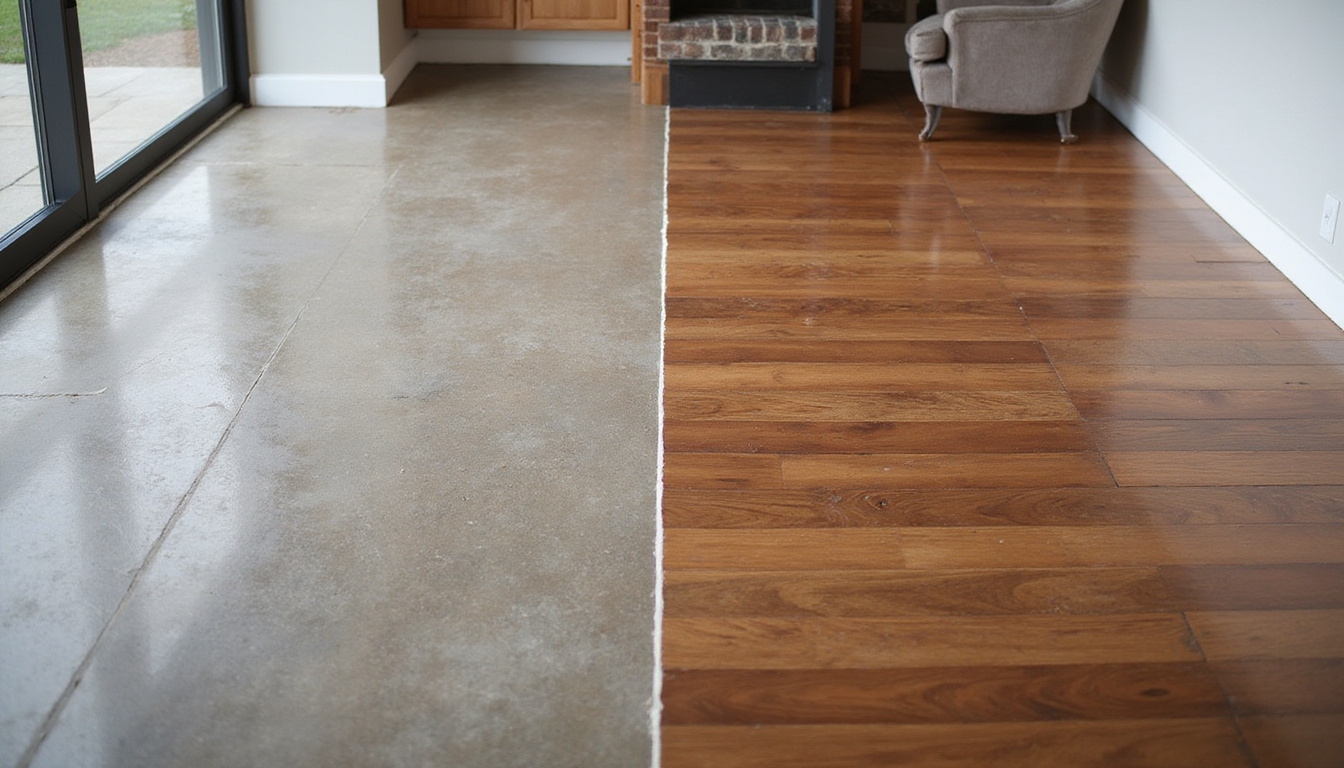
When done well, floor refinishing doesn’t just hide scratches—it can make your floors look brand new, extend their lifespan, and even boost your home’s value. Whether you have worn hardwood, tired engineered wood, or a faded gym floor, the right refinishing process can completely transform dull, damaged surfaces into beautiful, durable floors that stand up to daily life.

Below, you’ll learn what floor refinishing involves, how to know it’s time, the steps professionals follow, costs, and how to decide between DIY and hiring an expert.
What is floor refinishing?
Floor refinishing is the process of restoring a wood (or wood-like) floor by:
- Removing the old finish (and often a thin layer of wood)
- Repairing damage
- Applying new stain (optional)
- Sealing the floor with a protective topcoat
This is different from screening and recoating, which lightly buffs the existing finish and adds a fresh coat without sanding down to bare wood.
Refinishing is more intensive, but it provides a true reset of your floor’s appearance and protection.
Signs you need your floors refinished
You don’t have to guess when it’s time. Common signs your floors are ready for refinishing:
- Deep scratches and gouges that go through the finish and into the wood
- Gray, black, or dark patches, especially near water sources (water damage)
- Finish completely worn off in high-traffic paths
- Uneven coloring or faded areas from sunlight
- Splinters or rough patches that catch on socks or cleaning cloths
- Water soaks in immediately instead of beading on the surface
If you see bare wood or persistent dullness even after cleaning and polishing, a full floor refinishing is usually the most effective solution.
Types of floors that can be refinished
Not every hard surface can be sanded and refinished the same way. Here’s what typically works:
Solid hardwood floors
- Best candidate for floor refinishing
- Can usually be sanded and refinished 4–10 times over their lifespan, depending on thickness
- Common species: oak, maple, hickory, cherry, walnut
Engineered wood floors
- Have a hardwood “veneer” layer over a plywood or composite base
- Can be refinished if the top layer is thick enough (typically ≥ 3 mm)
- Often only allow 1–2 refinishes before the veneer is too thin
Parquet floors
- Made of small pieces arranged in patterns
- Usually solid wood and refinishable, but require a careful, experienced approach because of changing grain directions
Floors that generally cannot be sand-refinished
- Laminate (it’s a printed surface, not real wood)
- Luxury vinyl plank (LVP) or vinyl sheet
- Tile and natural stone (these are restored using different methods, not traditional wood floor refinishing)
If you’re not sure what you have, a flooring contractor can identify it quickly and recommend the safest approach.
The floor refinishing process step by step
Professional floor refinishing is methodical. While details vary by contractor and products, most projects follow this sequence.
1. Inspection and prep
- Assess wood type, condition, damage, and previous finishes
- Check for loose boards, squeaks, stains, and water damage
- Remove furniture, rugs, shoe molding (if needed), and floor vents
- Mask and seal adjacent rooms or HVAC vents to control dust
2. Sanding the floor
Sanding removes the old finish and evens out the surface.
- Coarse sanding with a drum or belt sander to strip old finish, paint, and deep scratches
- Medium sanding to remove coarse sanding marks and refine the surface
- Fine sanding for a smooth, even final surface
- Edging and corners done with specialized edgers and hand tools
- Vacuuming between grits to minimize dust and ensure an even result
If your floors are deeply cupped, warped, or uneven, sanding will correct much of that—but extremely damaged boards might need replacement.
3. Repairs and filling
Before finishing, professionals may:
- Replace or repair cracked, broken, or rotted boards
- Nail down loose boards and fix squeaks
- Fill nail holes, gaps, or small cracks with wood filler or trowelable filler
This step is critical for getting a seamless look.
4. Staining (optional)
If you want a different color, stain is applied to bare wood after sanding:
- Wiped or brushed on
- Allowed to penetrate for a set time
- Excess removed for an even tone
- Fully dried before sealing (often overnight, depending on product)
You can choose from natural looks to rich, dark tones; some species, like red oak, accept stain more easily and evenly than others, like maple.
5. Applying finish coats
The final step is sealing the wood to protect it from wear, moisture, and stains.
Common floor finishes include:
-
Oil-based polyurethane
- Warm, amber tone
- Very durable, often slower to dry
- Strong odor during application and curing
-
Water-based polyurethane
- Clear to slightly cool tone
- Low odor, faster dry times
- Keeps lighter woods (like maple or ash) from yellowing as much
-
Hardwax oils and penetrating finishes
- More natural, matte look
- Easier spot-repair, often more maintenance
- Popular for European-style finishes
Most floors receive 2–3 coats of finish, with light sanding or screening between coats for better adhesion and a smoother feel.
How long does floor refinishing take?
Typical timelines:
- Small room (bedroom, office): 1–2 days
- Average home’s main level: 3–5 days
- Large or complex projects: up to a week or more
Variables that affect time:
- Type of finish (oil-based typically takes longer to cure than water-based)
- Number of coats
- Weather and humidity levels
- Extent of repairs and prep work needed
Even after you can walk on the floors in socks (often within 24–48 hours for water-based finishes), full cure—when the finish reaches maximum hardness—may take 7–30 days, depending on the product (source: Wood Floor Manufacturers Association / NOFMA).
How much does floor refinishing cost?
Costs vary by region, floor type, and condition, but typical ranges for professional floor refinishing are:
- $3–$6 per square foot for straightforward jobs
- $6–$10+ per square foot for complex projects, repairs, or high-end finishes
Factors that influence price:
- Total square footage
- Number of rooms and layout complexity
- Staircases (often priced separately per step)
- Need for board replacement, repairs, or heavy leveling
- Choice of finish (standard poly vs. specialty or commercial-grade products)
- Local labor rates
While refinishing is an investment, it is usually far cheaper than full replacement and can dramatically upgrade your home’s appearance and resale appeal.
Benefits of professional floor refinishing
Well-executed floor refinishing offers more than a cosmetic refresh:
- Restores original beauty of wood grain and color
- Extends lifespan of your floors by protecting against wear and moisture
- Improves home value and buyer appeal
- Removes deep scratches and stains that won’t clean out
- Allows color changes to suit new décor or trends
- Improves cleanliness by sealing cracks and pores that trap dust and allergens
For many homeowners, refinishing is the single most dramatic, cost-effective improvement they can make to their interior.
DIY vs. hiring a floor refinishing professional
You can rent sanding equipment and do floor refinishing yourself—but it’s a challenging project. Consider the pros and cons.
DIY floor refinishing: pros
- Lower upfront cost if you already own or can cheaply rent tools
- Full control over schedule and products used
- Satisfying for experienced DIYers
DIY floor refinishing: cons
- Steep learning curve with sanders; one mistake can gouge the floor
- Dust control and edge/corner work can be tricky
- More time-consuming for nonprofessionals
- Risk of uneven stain, swirl marks, or visible sanding lines
- Product choice and application errors can lead to peeling or premature wear
Hiring a professional: pros
- Experience with different woods, finishes, and problems
- Better dust control using specialized equipment
- Faster completion and cleaner results
- Warranty or workmanship guarantee in many cases
- Guidance on color selection and maintenance
Hiring a professional: cons
- Higher upfront cost
- Need to coordinate schedule and access to the home
For small, out-of-the-way rooms, experienced DIYers may choose to tackle floor refinishing themselves. For main living areas, stairs, or high-value homes, hiring a pro often delivers the best long-term value and peace of mind.
How to prepare your home for floor refinishing
A little preparation ensures a smoother, faster project:
- Clear the space completely
- Furniture, rugs, plants, wall décor, and anything fragile should be removed
- Plan for limited access
- Arrange alternative sleeping or living spaces if key rooms are affected
- Discuss timing and products
- Confirm start date, finish type (oil vs. water-based), and cure times with your contractor
- Protect adjacent areas
- Remove items from open shelves; fine dust can travel even with good containment
- Arrange pet and child care
- Keep them away from work areas and finishes while drying and curing
Thinking through logistics ahead of time minimizes disruption and protects your belongings from dust and fumes.
Caring for your floors after refinishing
Good maintenance extends the life of your new finish:
- Wait before moving furniture back
- Follow your finisher’s instructions; often 48–72 hours before replacing furniture, longer for rugs
- Use felt pads under furniture legs to prevent scratching
- Clean with recommended products
- Avoid harsh chemicals, steam mops, or oil soaps unless your finisher approves
- Sweep or vacuum regularly to remove grit that acts like sandpaper
- Wipe spills immediately to prevent water damage or staining
- Use entry mats and runners in high-traffic or moisture-prone areas
With proper care, a well-refinished floor can look great for 7–10 years or more before another light refresh is needed.
FAQ about floor refinishing
Q1: How often should hardwood floors be refinished?
Most hardwood floors need full floor refinishing every 7–12 years, depending on traffic, pets, and maintenance. Lightly used spaces might go longer, while busy households with kids and dogs might need it more frequently. In between full refinishes, a screen and recoat every few years can extend the life of the finish.
Q2: Is it better to refinish hardwood floors or replace them?
Refinishing hardwood floors is usually better and more cost-effective if the boards are structurally sound. Floor refinishing can erase years of wear at a fraction of the cost of replacement. Replacement makes sense when boards are severely warped, rotted, infested, or too thin to sand again.
Q3: Can engineered wood floors be refinished like solid hardwood?
Some engineered floors can undergo hardwood floor refinishing, but it depends on the thickness of the top veneer. If the wear layer is thick enough (typically 3 mm or more), a careful sanding and refinishing is possible. Thin veneers should only be lightly buffed and recoated, not aggressively sanded.
Ready to transform your dull floors?
If your floors look tired, scratched, or stained, you don’t have to live with them—or pay for a full replacement. Professional floor refinishing can restore their natural beauty, protect them for years to come, and instantly elevate the look and value of your home.
Start by getting a detailed quote from a reputable refinishing specialist, asking about product options, timelines, and past projects. The right partner will help you choose the perfect color and finish for your space and guide you through every step—from prep to final walk-through.
Take the first step today: schedule a consultation, explore your options, and see how easily floor refinishing can turn dull, worn-out surfaces into beautiful, lasting floors you’ll be proud to show off.