


Grout Repair Tips Professionals Use for Flawless Tile Restoration
When grout starts cracking, crumbling, or discoloring, it can make even the nicest tile look tired and neglected. The good news: with the right grout repair techniques, you can restore your surfaces to a like-new finish without a full tile replacement. Professional tile restorers follow a series of proven steps and best practices that ensure repairs are durable, clean, and visually seamless.

This guide breaks down those pro-level grout repair tips into simple, actionable steps you can follow at home.
Understanding Grout Problems Before You Repair
Before diving into grout repair, it’s important to understand what you’re fixing and why it failed in the first place. Professionals always diagnose the problem first; if you skip this step, even perfect-looking repairs may not last.
Common grout issues
- Cracked grout – Often caused by movement in the subfloor, poor installation, or using the wrong grout type.
- Missing grout – Can result from age, water damage, or aggressive cleaning.
- Powdery or soft grout – Usually a sign of improper mixing or curing, or water intrusion.
- Stained or discolored grout – Caused by mold, mildew, spills, and cleaning chemicals.
- Efflorescence (white haze) – Mineral deposits brought to the surface by moisture migration.
When to repair vs. when to replace
-
Spot repair is enough when:
- Only a few small areas are cracked or missing.
- The surrounding grout is firm, not crumbling.
- Tiles are solid with no movement when stepped on or tapped.
-
Full re-grouting is better when:
- Large areas are loose, hollow-sounding, or powdery.
- Grout is severely stained and won’t respond to cleaning.
- There’s evidence of long-term moisture problems or mold behind the grout.
Professionals always test tile stability: tap tiles lightly with a tool handle. A solid “thunk” is good; a hollow sound suggests loose tiles or subfloor issues that must be corrected before grout repair.
Choosing the Right Grout for a Durable Repair
One of the most important professional grout repair tips is using the correct grout type. The wrong grout can crack, shrink, or discolor quickly.
Sanded vs. unsanded grout
-
Sanded grout
- Contains fine sand.
- Best for joints 1/8 inch (3 mm) or wider.
- More durable, less prone to shrinking.
- Used commonly for floors and wider wall joints.
-
Unsanded grout
- Smooth, no sand.
- Best for joints 1/16 to 1/8 inch.
- Ideal for polished stone and delicate tiles that sand could scratch.
- Used mainly on walls, backsplashes, and smaller joints.
For most homeowners doing localized grout repair, matching the existing grout type (and color) is the priority. When in doubt, bring a sample of the old grout to a tile store to help match color and type as closely as possible.
How Professionals Prepare Joints for Grout Repair
Proper surface prep is the number-one difference between professional and amateur grout repair. New grout will only last if it bonds to a clean, stable surface.
Remove damaged grout carefully
Pros don’t simply smear new grout over old. They remove the failing material to make space for a strong repair.
Tools you can use:
- Manual grout saw or carbide-tipped grout removal tool
- Oscillating multi-tool with a grout removal blade
- Rotary tool with a grout bit (for detailed work)
Professional technique guidelines:
- Remove at least 2/3 the depth of the tile (or about 1/8–1/4 inch minimum) so the new grout has enough bite.
- Keep the tool centered in the joint to avoid chipping tile edges.
- Work slowly and frequently vacuum dust to maintain visibility.
Clean joints thoroughly
After removal, pros always clean the joints meticulously:
- Vacuum out all dust and particles from the joints.
- Use a stiff nylon brush to scrub the joints and loosen fine debris.
- Wipe the area with a damp sponge or cloth to lift remaining dust.
- Let surfaces dry completely before applying new grout (unless using a specific product that requires damp joints).
If there’s mold or mildew, professionals treat the area with a mildew remover or diluted bleach solution (following safety precautions and ventilation) and allow it to dry fully. Persistent mold may indicate a leak behind the tile, which must be addressed before any grout repair.
Step-by-Step Professional Grout Repair Method
Here’s the basic process tile pros use for small-area repair with cement-based grout.
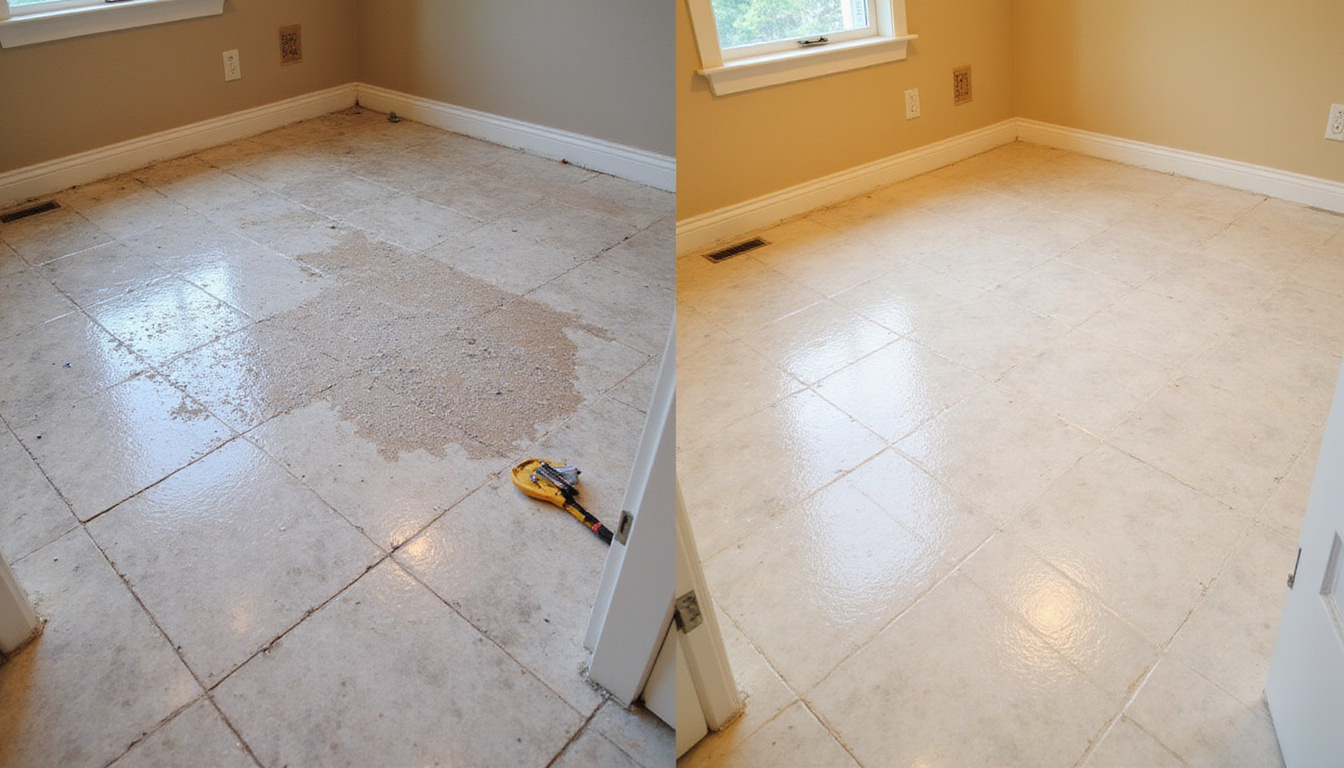
1. Mix grout to the right consistency
- Follow the manufacturer’s instructions for water-to-powder ratio.
- Mix until creamy, like peanut butter—not runny, not crumbly.
- Let it slake (rest) for 5–10 minutes, then remix without adding more water.
- Only mix what you can apply within the working time (often 20–30 minutes).
2. Dampen the joints (if recommended)
For cement grout, many pros lightly dampen the joints with a clean sponge just before applying. This:
- Prevents the dry surface from pulling moisture too quickly from the grout.
- Improves bond strength and reduces cracking.
The joints should be slightly damp, not shiny-wet or puddled.
3. Pack grout firmly into joints
- Use a rubber grout float held at a 45-degree angle.
- Spread grout diagonally across the joints, pressing firmly to pack the material deep into the gaps.
- Work in small areas (2–4 square feet) to maintain control.
Professionals make multiple passes from different directions to ensure there are no air pockets or voids.
4. Remove excess grout from tile surface
- Hold the float nearly upright and scrape diagonally across tiles to remove as much extra grout as possible.
- The less grout left on the tile face, the easier the cleanup and the cleaner your lines will be.
5. Initial cleanup with a sponge
After the grout has begun to firm up slightly (usually 10–20 minutes, depending on product and conditions):
- Use a damp (not dripping) sponge.
- Wipe in light, circular motions to shape the joints and remove film, rinsing the sponge frequently.
- Finish with long, light strokes along the joints to smooth them.
Professionals avoid over-washing, which can:
- Weaken the grout
- Wash color pigments out
- Create low or uneven joints
6. Final buff and haze removal
Once the grout has set further and a slight haze appears:
- Use a dry microfiber cloth or cheesecloth to buff off haze from the tile surface.
- For stubborn haze on non-porous tiles, pros may use a manufacturer-approved grout haze remover after full curing, following directions precisely.
Sealing and Protecting New Grout Like a Pro
Even perfect grout repair can fail prematurely if the grout isn’t protected, especially in kitchens and bathrooms.
When and how to seal grout
For cement-based grout:
- Wait until the grout is fully cured (commonly 48–72 hours; follow product instructions).
- Use a penetrating grout sealer, not a topical glossy sealer, for most indoor applications.
- Apply with:
- A small foam brush
- A specialty grout sealer applicator bottle with a wheel
- A small artist’s brush for precision
Professional tips:
- Work in manageable sections and wipe off any sealer from tile faces before it dries.
- Apply at least two coats in high-moisture or high-traffic areas, as recommended.
- Re-seal periodically (every 1–3 years) depending on use and product type.
Epoxy grout generally does not require sealing, as it is already highly stain- and water-resistant (source: TCNA – Tile Council of North America).
Avoiding Common DIY Grout Repair Mistakes
Pros learn over time what not to do. Keep your repair looking flawless by avoiding these frequent errors:
- Skipping grout removal – Smearing new grout on top of loose or damaged material leads to rapid failure.
- Using the wrong grout type – Unsanded grout in wide joints or sanded on soft stone can cause cracking or scratching.
- Adding extra water during cleanup – Over-washing weakens grout and causes color inconsistency.
- Rushing the drying time – Walking on floors, using showers, or cleaning aggressively before grout is cured can cause cracks and washouts.
- Not addressing movement – If tiles move because of subfloor problems, even the best grout repair will eventually fail again.
Simple Maintenance Habits That Extend Grout Life
Once you’ve completed your grout repair, a few maintenance habits will help your work last:
- Clean regularly with pH-neutral tile and grout cleaners, not harsh chemicals or vinegar.
- Quickly wipe up spills, especially oils, wine, and colored liquids.
- Keep showers well-ventilated; use exhaust fans and squeegees to reduce moisture.
- Inspect grout annually for early signs of cracks or gaps, and spot-repair promptly.
- Reapply grout sealer as needed based on traffic and exposure.
FAQ: Grout Repair Questions Homeowners Ask
How do I know if I can do grout repair myself or need a pro?
If your grout issues are limited to small cracks, pinholes, or missing spots—especially where tiles are solid and don’t move—DIY grout repair is very achievable. However, if you notice loose tiles, widespread crumbling grout, persistent dampness, or mold behind surfaces, it’s safer to consult a tile professional or contractor to inspect for structural or moisture problems.
What’s the best product to use for small shower grout repairs?
For localized shower grout repair, a mold- and mildew-resistant, polymer-modified cement grout that matches your existing grout is usually best. In very high-moisture or commercial settings, a professional might recommend epoxy grout for its superior water and stain resistance—but epoxy is more challenging for beginners, so many homeowners opt for cement grout plus a high-quality sealer.
Can I just caulk instead of doing grout repair?
Caulk and grout serve different purposes. Grout fills joints between tiles on stable surfaces. Caulk is used at changes of plane or where movement occurs, like where walls meet tubs or countertops. Professionals often remove failing grout at these transitions and replace it with a flexible, color-matched silicone or acrylic caulk, but for interior field joints between tiles, actual grout repair is recommended, not caulk substitution.
Restore Your Tile Like a Pro With Smart Grout Repair
Flawless tile restoration doesn’t require a full renovation—just careful, well-executed grout repair. By:
- Diagnosing the real cause of grout failure
- Choosing the right grout type and color
- Removing damaged material and cleaning joints thoroughly
- Applying and shaping new grout with pro-level technique
- Sealing and maintaining your repaired grout
you can bring back the original beauty of your floors, walls, and showers and keep them looking sharp for years.
If your tile has seen better days or you’re unsure what’s causing your grout problems, take the next step now. Start with a small, low-risk area to practice these methods, or reach out to a trusted local tile professional to inspect your space and recommend a tailored grout repair plan. With the right approach today, you’ll avoid costly tear-outs tomorrow and enjoy cleaner, brighter tile surfaces throughout your home.