


Kitchen Ventilation Secrets Every Home Cook Needs to Know
If you love to cook, understanding kitchen ventilation is just as important as knowing how to season a cast-iron skillet. Good ventilation keeps smoke, grease, heat, and odors under control, protects your health, and even helps your appliances and cabinets last longer. Yet it’s one of the most overlooked parts of a home kitchen.

This guide breaks down how kitchen ventilation really works, what you need in different types of kitchens, and the simple upgrades that make a huge difference in everyday cooking.
Why Kitchen Ventilation Matters More Than You Think
Every time you cook, you create:
- Moisture from boiling and simmering
- Grease particles from frying and sautéing
- Combustion byproducts (like nitrogen dioxide and carbon monoxide) from gas burners
- Smoke and fine particles that can irritate your lungs
Without proper kitchen ventilation, these stay trapped in your home. Over time, that can lead to:
- Persistent cooking odors
- Greasy film on cabinets and walls
- Poor indoor air quality, especially in tight modern homes
- Exacerbation of asthma and respiratory issues (especially with gas stoves)
The U.S. Environmental Protection Agency notes that indoor air can be more polluted than outdoor air if homes are poorly ventilated (source: EPA – Indoor Air Quality). A well-designed kitchen ventilation system is your first line of defense.
The Two Main Types of Kitchen Ventilation
Before you pick a range hood or fan, you need to understand the two basic approaches to kitchen ventilation: ducted and ductless.
1. Ducted (Vented) Systems
A ducted kitchen ventilation system captures air from above your cooktop and pushes it outside through ductwork.
Pros
- Best at removing heat, moisture, odors, and pollutants
- Ideal for serious cooks and high-heat cooking (stir-fries, searing, deep-frying)
- Helps control humidity and grease buildup in the kitchen
Cons
- Requires proper duct installation (through a wall, soffit, or roof)
- More expensive and complex to add in an existing kitchen
- Less flexible placement, especially in apartments or condos
If you’re building or doing a major renovation and you cook frequently, ducted kitchen ventilation is usually the gold standard.
2. Ductless (Recirculating) Systems
Ductless range hoods pull air through filters and then recirculate it back into the room.
Pros
- Flexible placement; no ductwork required
- Easier and cheaper to install
- Often the only option in rentals and condos
Cons
- Do not remove heat or moisture—only particulates and some odors
- Rely on charcoal filters that must be changed regularly
- Less effective for frequent, heavy, or high-heat cooking
For light cooking or where ducts aren’t possible, ductless kitchen ventilation is better than nothing—but you’ll want to combine it with other strategies, like opening windows and running a whole-house exhaust fan if you have one.
How Much Ventilation Do You Really Need? (Understanding CFM)
Ventilation power is measured in CFM (cubic feet per minute). This tells you how much air the system can move.
Basic Rules of Thumb
For most home cooks, these guidelines are a good starting point:
-
Electric or induction cooktops:
~100 CFM per linear foot of cooktop- Example: A 30" range (2.5 feet) → at least 250 CFM
-
Gas ranges:
Estimate 1 CFM per 100 BTU of burner output- Example: A 50,000 BTU gas range → at least 500 CFM
-
Heavy-duty or pro-style ranges:
Often require 600–1,200+ CFM, depending on size and BTU rating
Don’t Ignore Capture Area and Hood Size
CFM isn’t the only factor. Your kitchen ventilation needs a hood that’s large and deep enough to capture smoke and steam before it escapes.
- Ideally, the hood should be at least as wide as the cooktop
- For high-heat cooking, aim for a hood that’s 3" wider on each side
- Depth matters: the hood should cover the front burners, not just the back
A quiet, moderate-CFM hood with a good capture area usually outperforms a very powerful but shallow hood that lets smoke billow around it.
Types of Range Hoods: Which One Is Right for You?
Modern kitchen ventilation comes in several styles. Function should come first, but you can usually find an option that fits your layout and aesthetic.
Under-Cabinet Hoods
Mounted under a cabinet directly above the range.
Best for: Most standard kitchens where the range sits against a wall with cabinets above.
Pros: Space-efficient, relatively affordable.
Watch for: Make sure the cabinet doesn’t block the hood’s front edge.
Wall-Mount Chimney Hoods
Mounted directly to the wall with a chimney extending upward.
Best for: Ranges against a wall without overhead cabinets.
Pros: Strong ventilation, design statement.
Watch for: Ensure chimney path can connect to exterior ducting.
Island Hoods
Suspended from the ceiling above an island cooktop.
Best for: Open-plan kitchens with island ranges.
Pros: Designed to work without adjacent walls.
Watch for: Needs higher CFM and good design because smoke can dissipate in all directions.
Downdraft Systems
Pull air downward through vents that pop up from the back or side of a cooktop.
Best for: Kitchens where overhead hoods are difficult or undesired.
Pros: Less visually prominent.
Watch for: Generally less effective than overhead ventilation; struggle with tall pots and rising steam.
Microwave-Range Hood Combos
Microwave units with a built-in ventilation fan, installed over the range.
Best for: Small kitchens needing space efficiency.
Pros: Two-in-one appliance.
Watch for: Limited capture area and lower performance than full-sized hoods.
Proper Use: Are You Using Your Ventilation Correctly?
Even the best kitchen ventilation system won’t work well if you use it incorrectly. A few simple habits dramatically improve performance:
-
Turn it on before you start cooking.
This creates airflow that captures early fumes instead of chasing them after they’ve spread. -
Use higher speeds for high-heat cooking.
Frying, searing, wok cooking, and broiling usually call for a stronger fan setting. -
Let it run after you’re done.
Run the fan for 10–15 minutes after cooking to clear residual moisture and odors. -
Use lids when possible.
Lids reduce steam and splatter, making the job easier for your ventilation system.
Maintenance: Keeping Your Kitchen Ventilation Efficient
A neglected hood becomes noisy, weak, and greasy. Keeping your system clean and maintained is essential both for performance and for fire safety.
Clean the Filters Regularly
Most hoods use either metal mesh filters or baffle filters:
-
Metal mesh filters
- Remove and soak in hot, soapy water
- Use a degreaser if needed
- Some are dishwasher-safe (check your manual)
-
Baffle filters
- Common in higher-end or pro-style hoods
- Also removable and usually dishwasher-safe
For ductless systems, replace charcoal filters as recommended (often every 3–6 months, depending on cooking frequency).
Don’t Forget the Hood Surface and Fan
- Wipe down the underside and exterior of the hood frequently
- Deep-clean with a degreaser to prevent greasy buildup
- Listen for unusual noises from the fan, which might indicate a loose or unbalanced blower
Balancing Ventilation with Energy Efficiency
Very powerful kitchen ventilation can sometimes create negative pressure in tight, energy-efficient homes. This can:
- Make doors hard to close
- Pull in unconditioned air from outside
- Interfere with gas appliances, fireplaces, or furnaces
If you’re installing a high-CFM system (often 400+ CFM, depending on your local code), you may need a makeup air system—a controlled way to bring in fresh outdoor air to balance what your hood exhausts.
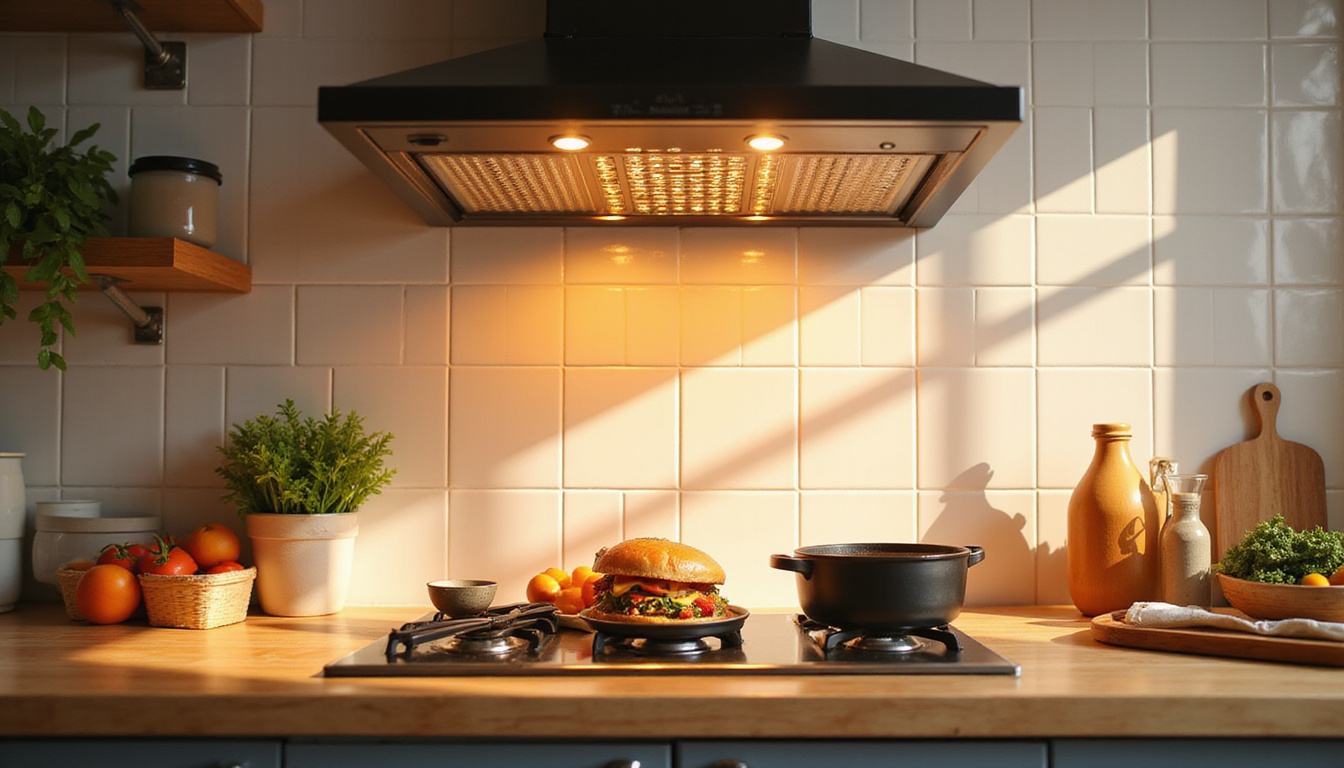
Building codes vary by region, so consult a local HVAC professional or contractor if you’re planning a large, powerful kitchen ventilation setup.
Kitchen Ventilation Tips for Different Home Types
Not all homes have the same options. Here’s how to optimize in common situations.
In Apartments and Condos
- You’re often limited to ductless hoods or microwave-hood combos
- Prioritize a hood with strong charcoal filtration and multiple fan speeds
- Open nearby windows when cooking intensely (especially with gas)
- Use a portable air purifier in the main living area if odors travel
In Older Homes
- Existing ducts may be undersized or poorly routed (with too many bends)
- Replacing old, noisy hoods with newer, quieter, more efficient units can be a major upgrade
- Check that vents actually exhaust outdoors, not into an attic or wall cavity
In New Builds or Major Renovations
- Plan the duct route early—short, straight, and properly sized ducts work best
- Consider a slightly larger hood (wider and deeper) if you cook often
- Discuss makeup air requirements with your contractor for powerful systems
Common Kitchen Ventilation Mistakes to Avoid
Many home cooks unknowingly sabotage their own ventilation. Watch out for:
- Undersized hoods that don’t cover the front burners
- Too-high installations (check manufacturer’s recommended mounting height, often 24–30 inches above cooktop)
- Long, twisty duct runs with many turns, which reduce effective CFM
- Venting into an attic or crawlspace instead of outdoors—this can cause moisture and mold problems
- Never using the hood because it’s too noisy; in that case, upgrading to a quieter model is worth it
Quick Checklist: Is Your Kitchen Ventilation Doing Its Job?
Use this simple list to evaluate your current setup:
- [ ] Hood (or fan) is at least as wide as the cooktop
- [ ] Installed at the correct height above the range
- [ ] Ducted to the outside (if possible) with minimal bends
- [ ] You turn it on before you start cooking
- [ ] You use higher speeds for smoky or high-heat cooking
- [ ] Filters are cleaned (or replaced) every 1–3 months
- [ ] You don’t see lingering smoke or haze after cooking
- [ ] Odors clear from the kitchen within 30–60 minutes
If you’re checking “no” on several of these, your kitchen ventilation is probably underperforming—and it may be time for some upgrades.
FAQ: Common Questions About Kitchen Ventilation
1. What’s the best kitchen ventilation system for a gas stove?
For gas, a ducted range hood with adequate CFM (often 400–600+ depending on BTU) is ideal. It should cover the entire cooktop and be mounted at the recommended height. If ducted ventilation isn’t possible, use a high-quality ductless hood, run it on a higher setting, and combine it with open windows and good general home ventilation.
2. Do I really need a range hood for an electric or induction cooktop?
Yes—while electric and induction don’t produce combustion byproducts like gas, they still generate grease, steam, and fine particles from food and oil. A good kitchen ventilation hood will keep your air cleaner, your cabinets less greasy, and your home-smelling fresher, even without a gas flame.
3. How often should I clean kitchen ventilation filters?
For most home cooks, cleaning or replacing filters every 1–3 months is a good rule. If you fry frequently or cook daily, check monthly. Metal filters can often be cleaned in the dishwasher; charcoal filters in recirculating systems should be replaced according to the manufacturer’s schedule.
Breathe Easier: Upgrade Your Kitchen Ventilation
Thoughtful, well-maintained kitchen ventilation transforms cooking from a smoky, sweaty chore into a cleaner, more comfortable experience. It protects your health, preserves your home, and makes it easier to enjoy the foods you love without lingering smells and haze.
If your hood is noisy, weak, or rarely used, now is the time to act. Evaluate your current setup, decide whether ducted or ductless is realistic, and choose a properly sized, effective system. Then build the simple habits—turning it on before cooking, running it after, and cleaning filters regularly—that keep it performing at its best.
Start today: take five minutes to inspect your current kitchen ventilation, note what’s working (and what isn’t), and make a plan to improve it. Your lungs, your home, and your next dinner party will all benefit.