

Smart Thermostats That Slash Energy Bills and Boost Home Comfort Fast
Smart thermostats are one of the quickest, simplest upgrades you can make to cut utility costs and improve comfort at home. Whether you live in a small apartment or a large house, smart thermostats can automate heating and cooling, learn your habits, and help you use energy far more efficiently—often without sacrificing comfort at all.

Below, you’ll learn how these devices work, what kind of savings you can realistically expect, key features to look for, and how to choose and install the right model for your home.
How Smart Thermostats Work (and Why They Save Money)
At their core, smart thermostats do three things better than old programmable or manual thermostats:
- Automation: They adjust temperature settings automatically based on schedules, sensors, and your location.
- Intelligence: They learn your patterns and preferences over time.
- Connectivity: They connect to Wi‑Fi, so you can control them from your phone or via voice assistants.
Instead of keeping your home at the same temperature all day, smart thermostats optimize heating and cooling based on when you’re actually home and what’s happening in real time. That means less wasted energy and lower bills.
The Key Technologies Behind Smart Thermostats
- Learning algorithms: Many models track when you adjust the temperature and adapt, creating smart schedules without you programming anything.
- Occupancy and motion sensors: These detect whether anyone is home and tweak settings accordingly.
- Geofencing: Your thermostat uses your smartphone’s location to tell when you’re leaving or returning, so it can reduce or ramp up heating/cooling at the right time.
- Weather awareness: Some devices factor in outdoor temperature and humidity to maintain indoor comfort efficiently.
All of this adds up to fewer hours of unnecessary heating or air conditioning—often the single biggest driver of residential energy use (source: U.S. Energy Information Administration).
How Much Can Smart Thermostats Actually Save?
Every home is different, but most people install smart thermostats for one main reason: lower energy bills. The savings can be significant when used correctly.
Typical Energy Savings
While numbers vary by brand and climate, studies and manufacturer data commonly show:
- 10–15% savings on heating
- 10–20% savings on cooling
For many households, that translates to $100–$200 per year in utility savings. If your energy rates are high or your current thermostat settings are inefficient, your savings could be even greater.
What Influences Your Savings?
Several factors affect the real-world impact of smart thermostats:
- Climate: More extreme climates (hot summers, cold winters) mean more HVAC usage and more potential savings.
- Home insulation and sealing: Poorly insulated homes lose heat or cool air faster; a smart thermostat can still help but can’t fix structural issues.
- Your previous habits: If you almost never adjusted your old thermostat or didn’t use scheduling, a smart thermostat can dramatically reduce waste.
- Type and efficiency of HVAC system: High-efficiency systems plus good controls = maximal benefit.
- How you use the smart features: Enabling eco modes, geofencing, and schedules is crucial to seeing the biggest impact.
In many cases, smart thermostats pay for themselves within 1–3 years through reduced energy bills.
Comfort Upgrades: Not Just About Saving Money
The best smart thermostats don’t just cut costs—they noticeably improve your day-to-day comfort.
Personalized Temperature Schedules
Instead of one static setting, you can have different temperatures for:
- Early morning
- Daytime (home vs. away)
- Evening relaxation
- Overnight sleeping
Over time, many smart thermostats fine-tune these schedules based on your adjustments, leading to a home that “just feels right” most of the time, without you constantly fiddling with controls.
Room-by-Room Comfort (With Sensors)
Traditional thermostats only measure temperature where they’re installed—often a hallway that doesn’t represent how your living room or bedroom feels.
Many smart thermostats now support remote temperature sensors you can place in key rooms. The system can then:
- Prioritize comfort in occupied rooms
- Balance out hot and cold spots
- Maintain better overnight comfort in bedrooms
Better Air Quality and Humidity Management
Some smart thermostats integrate with:
- Humidifiers and dehumidifiers
- Whole-home ventilation systems
- Air quality monitors
This can lead to more consistent humidity, fewer comfort swings, and better indoor air quality—especially in homes with allergies or respiratory concerns.
Key Features to Look For in Smart Thermostats
Not all smart thermostats are the same. When comparing options, focus on features that match your home, system type, and lifestyle.
1. Compatibility With Your HVAC System
First, ensure the smart thermostat supports your existing system:
- Forced-air furnace and AC
- Heat pump (with or without auxiliary heat)
- Radiant or boiler systems
- Multi-stage heating/cooling
- Zoned systems
Most major brands offer online compatibility checkers—use these before buying.
2. Energy-Saving Intelligence
Look for features that directly drive energy savings:
- Adaptive learning: Builds schedules based on your behavior.
- Eco or away modes: Automatically dial back temperature when you’re gone.
- Geofencing: Uses your phone’s location to detect departures and arrivals.
- Energy usage reports: Show how your settings affect consumption and costs.
3. Controls and Integrations
Consider how you prefer to interact with your thermostat:
- Mobile app (iOS and Android)
- Voice assistant compatibility (Alexa, Google Assistant, Siri)
- Smart home integrations (SmartThings, HomeKit, IFTTT, etc.)
- On-device interface: Some have simple buttons; others boast large, colorful touchscreens.
4. Sensors and Smart Home Ecosystem
To get the most out of your smart thermostats, look for:
- Remote room sensors
- Motion and occupancy detection
- Humidity sensing
- Integration with smart vents, smart blinds, or other climate-related devices
5. Ease of Use and Setup
A powerful device is only good if you actually use the features. Prioritize:
- Clear installation guides and in-app walkthroughs
- Simple, intuitive interface
- Helpful automated suggestions for schedules and eco settings
- Reliable customer support
Step-by-Step: Getting Fast Wins From a New Smart Thermostat
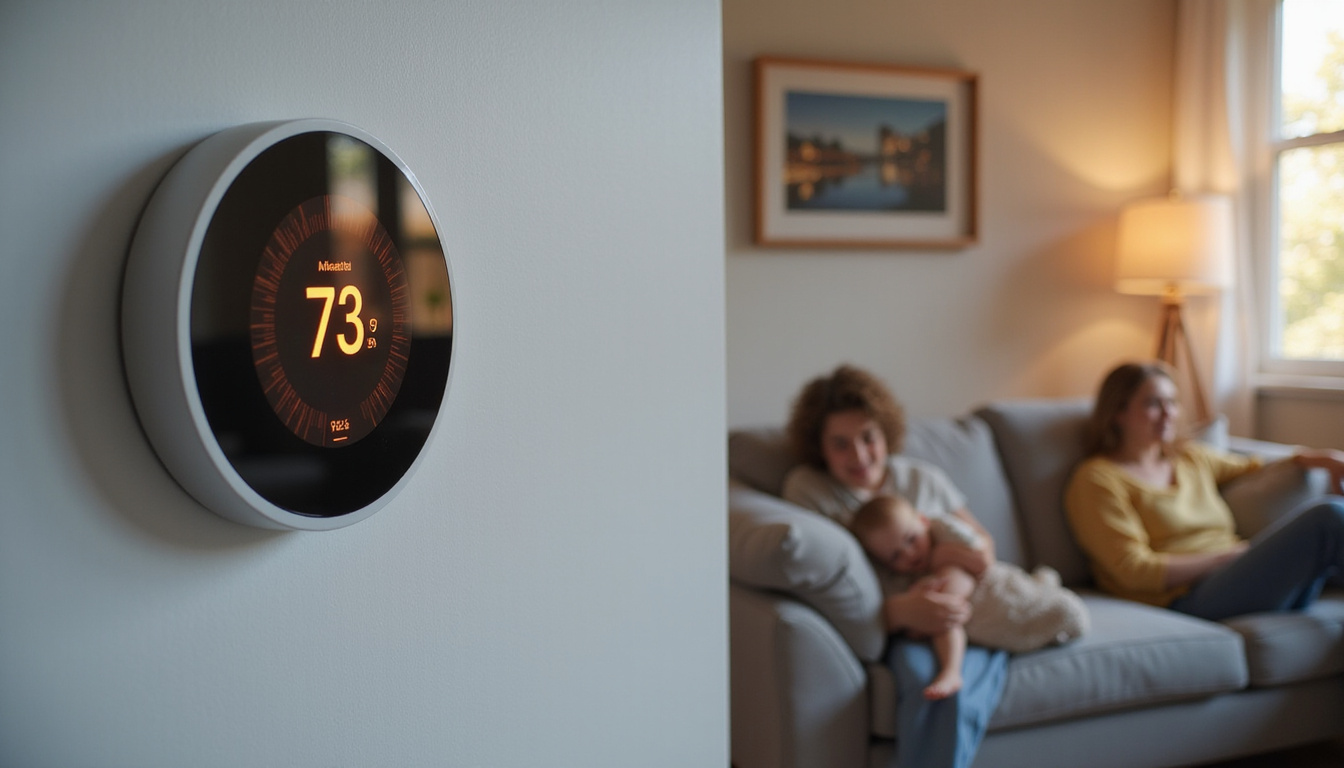
To quickly slash bills and boost comfort, follow these practical steps once your thermostat is installed.
-
Run the setup wizard completely.
Answer questions about your schedule, comfort preferences, and system type; this feeds the thermostat’s algorithms. -
Enable geofencing and occupancy detection.
Let the device automatically shift to away mode when no one is home. -
Start with recommended eco temperatures.
Typical starting points:- Winter: 68–70°F (20–21°C) when home, 62–65°F (16–18°C) away/asleep
- Summer: 74–78°F (23–26°C) when home, 80–84°F (27–29°C) away
-
Set a simple base schedule.
Morning, day, evening, night. Let the smart thermostat refine it over time based on your adjustments. -
Use room sensors if available.
Put them in your most-used rooms (e.g., living room and primary bedroom), and enable comfort balancing. -
Monitor your first month’s energy reports.
Many smart thermostats show how your usage compares to previous months and suggest specific tweaks. -
Gradually expand eco settings.
If you’re still comfortable, widen the gap between home and away temperatures by 1–2 degrees to harvest more savings.
Common Mistakes That Reduce Smart Thermostat Benefits
Avoid these pitfalls that can quietly erode both comfort and savings:
- Frequent manual overrides: Constantly changing the temperature up and down prevents the device from learning and can increase energy use.
- Disabling auto-away or geofencing: Turning off these features removes one of the biggest efficiency gains.
- Ignoring maintenance alerts: Many smart thermostats remind you about filter changes; skipped maintenance can hurt efficiency and comfort.
- Poor sensor placement: Installing the main thermostat or remote sensors near heat sources, direct sun, or drafts will skew readings.
- Not coordinating with other smart devices: If you have smart blinds, fans, or vents, integrate them so they can work together.
The goal is to set up a system you rarely think about, not one that requires constant tinkering.
Are Smart Thermostats Worth It?
For most households with central heating and cooling, smart thermostats are a high-impact, relatively low-cost upgrade.
They’re especially worth it if:
- Your energy bills are high, particularly for heating and cooling.
- Your current thermostat is outdated, manual, or unused in “smart” mode.
- Your schedule is irregular, or family members come and go at different times.
- You value remote control (e.g., adjusting settings from work or on vacation).
- You want more precise, room-focused comfort.
If your home relies on space heaters, window AC units, or very simple HVAC setups, the benefits may be more limited—but for typical forced-air systems, the cost–benefit ratio is compelling.
FAQ: Smart Thermostats, Energy Savings, and Comfort
Q1: Do smart thermostats really save energy compared to programmable thermostats?
Yes—smart thermostats typically outperform basic programmable units because they adapt automatically and adjust based on real-time factors like occupancy and weather. Many people never properly program traditional thermostats; smart models remove that burden and continuously optimize behind the scenes.
Q2: Which smart thermostat saves the most on energy bills?
The “best” smart thermostat for energy savings is the one that fits your system and you’ll use fully. Look for models with learning capabilities, geofencing, occupancy sensors, and detailed energy reports. Make sure it’s compatible with your HVAC, and enable all its energy-saving features; that combination is more important than the brand name alone.
Q3: Are smart thermostats hard to install and set up?
Most modern smart thermostats are designed for DIY installation with clear app-based guides. If you have a standard low-voltage HVAC system and a C-wire, installation usually takes under an hour. For more complex systems or if you’re unsure about wiring, hiring a professional HVAC technician or electrician is a safe choice.
Smart thermostats are one of the fastest ways to slash energy bills and dramatically improve home comfort without major renovations. With intelligent scheduling, occupancy awareness, and powerful app controls, they turn your HVAC system into a responsive, efficient, and personalized comfort engine.
If you’re ready to spend less on utilities and enjoy a home that feels better in every season, make upgrading to smart thermostats your next home improvement move. Check your HVAC compatibility, choose a model with strong energy-saving features and room sensors, and install it this week—you could start seeing lower bills and higher comfort as soon as your next utility cycle.